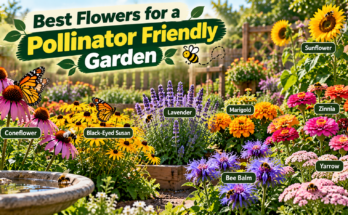
When I plan a vegetable garden, I usually think about vegetables first. Tomatoes, cucumbers, peppers, beans, squash, and leafy greens often take most of the attention. However, I have found that flowers can also play an important role in creating a healthy and productive garden.
Flowers are not only useful for making a garden look colorful. They can attract pollinators, provide food for helpful insects, improve garden diversity, and create a more balanced growing environment. When flowers are planted thoughtfully around vegetables, they can become an important part of the garden.
Why Flowers Are Useful in a Vegetable Garden
Many vegetable plants depend on flowers before they can produce the food we harvest. Tomatoes produce flowers before tomatoes appear. Cucumbers produce flowers before cucumbers develop. Squash, pumpkins, melons, beans, and many other crops also follow this natural process.
Flowers growing near vegetable plants can attract bees, butterflies, and other insects. These visitors move between flowers while searching for nectar and pollen. Their activity can support natural pollination.
For me, this is one of the biggest reasons to include flowers in a vegetable garden.
Flowers Attract Pollinators
Pollinators are extremely important for many vegetable crops. Bees are especially valuable because they visit many flowers while collecting nectar and pollen.
A garden with flowers can provide an additional food source for these insects. Once pollinators are attracted to the area, they may also visit nearby vegetable flowers.
Sunflowers, zinnias, cosmos, lavender, marigolds, and many suitable native flowers can help make a garden more attractive to pollinators.
Flowers Can Attract Helpful Insects
Flowers do more than attract bees and butterflies. They can also attract insects that help control garden pests.
Some beneficial insects feed on aphids, caterpillars, and other unwanted insects. Others spend part of their life around flowers and use nectar as a food source.
This is one reason I like having a mixture of flowers and vegetables rather than separating everything into completely different areas.
Flowers Add Diversity
A garden with only one type of plant can be less diverse than a garden containing vegetables, herbs, flowers, and other plants.
Plant diversity creates different sources of food and shelter for insects. It can also make the garden more interesting to observe.
I believe a diverse garden often feels more natural because it supports more types of life.
Flowers Can Make Small Gardens More Useful
You do not need a large garden to grow flowers.
If space is limited, flowers can be planted along vegetable bed borders, in containers, near pathways, or in small empty areas.
For example, a few containers of flowering plants can support pollinators even if you are growing vegetables in a small backyard.
This makes flowers a practical option for both large and small gardens.
Choose Flowers That Suit Your Climate
One of the most important things to consider is the local climate.
A flower may look beautiful in pictures but struggle if it is not suited to your growing conditions.
I prefer choosing plants that can handle the local temperature, sunlight, soil, and water conditions. Native flowers can be particularly useful because they are naturally adapted to the local environment.
Plant Flowers Near Vegetable Crops
Flowers can be planted close to vegetables so pollinators do not have to travel far between food sources.
You can create a flower border around the vegetable garden or place flowers between suitable areas.
However, it is still important to give vegetables enough room, sunlight, water, and nutrients.
Flowers should support the vegetable garden rather than overcrowd it.
Flowers Can Provide Long Term Benefits
If you choose flowers that bloom at different times, your garden can provide resources for insects over a longer part of the growing season.
Some flowers may bloom early while others bloom later.
This creates a more continuous food supply for pollinators and beneficial insects.
I find this approach more useful than planting many flowers that all bloom during the same short period.
Avoid Unnecessary Chemical Use
If flowers are being grown to attract beneficial insects, unnecessary pesticide use can defeat the purpose.
Before treating a plant, I recommend identifying the actual problem. Not every insect is harmful.
Some insects are simply visiting the garden, while others may actually help control pests.
Using chemicals only when necessary and following product directions carefully can help protect beneficial insects.
Flowers Can Improve the Appearance of Your Garden
There is also a simple visual benefit.
A vegetable garden filled with colorful flowers can look much more attractive. Flowers can break up rows of green vegetables and add different shapes and colors.
For me, this makes gardening more enjoyable. A productive garden does not have to look plain.

Final Thoughts
Flowers can support vegetable plants in several ways. They can attract pollinators, provide resources for helpful insects, increase garden diversity, and make the garden more attractive.
The best approach is to choose flowers that suit your climate and place them where they can grow without competing too strongly with vegetables.
From my point of view, flowers and vegetables belong together. A garden that combines both can become a more active, diverse, and enjoyable place to grow food.