Growing vegetables at home is rewarding because I get to see the entire process from planting a seed to harvesting fresh food. But I believe the real reward comes when those vegetables become part of everyday meals.
Sometimes gardeners focus so much on growing that they forget to plan how they will actually enjoy the harvest. A successful garden can produce more vegetables than expected, so having simple ideas for using them can make gardening even more enjoyable.
Eat Vegetables Fresh
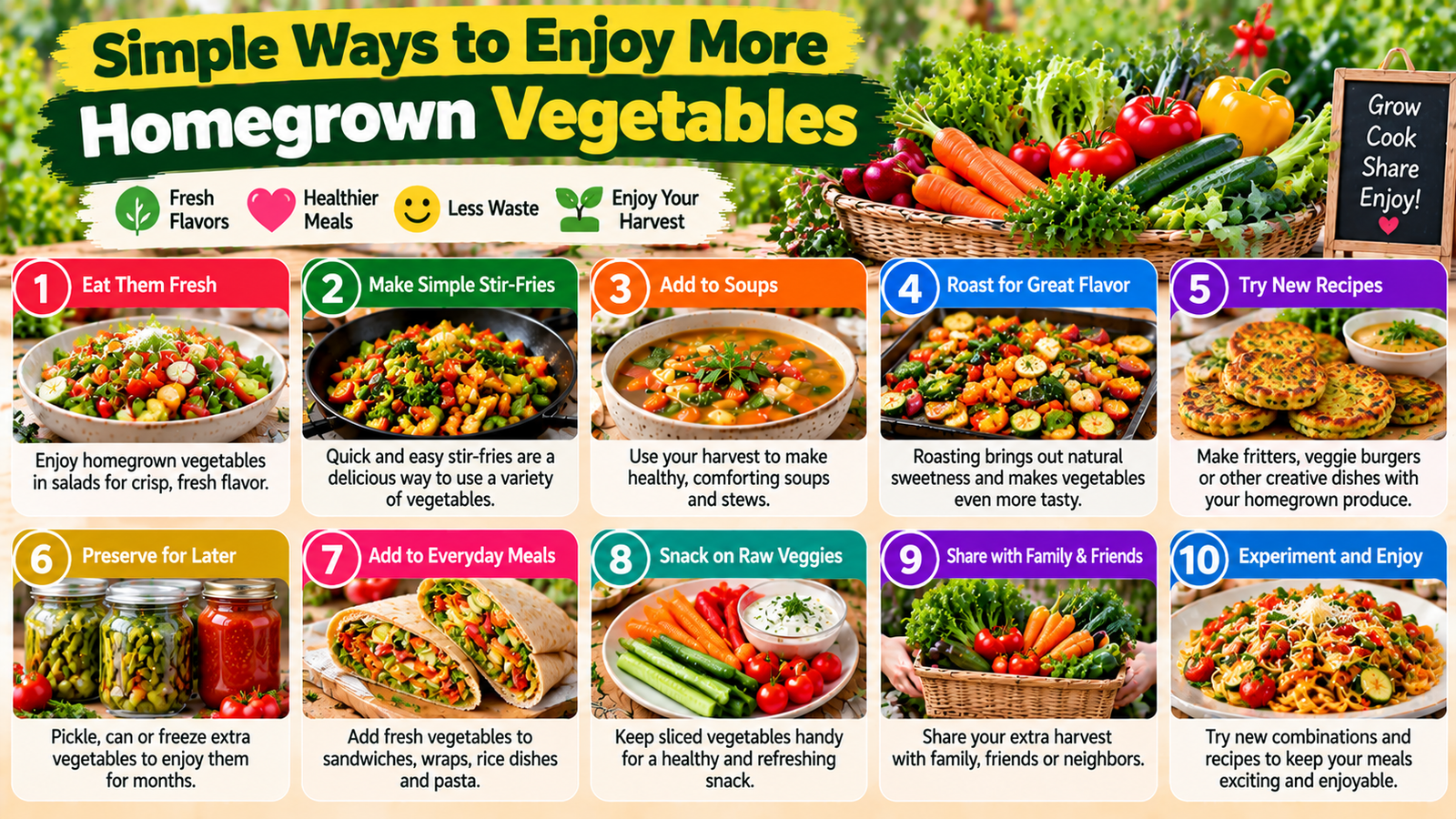
The simplest way to enjoy homegrown vegetables is to eat them fresh.
Fresh tomatoes, cucumbers, carrots, lettuce, peppers, and other vegetables can become quick salads or side dishes.
When vegetables come directly from the garden, I often prefer simple preparation because it allows their natural flavor and freshness to stand out.
Add Vegetables to Everyday Meals
I do not think vegetables need to be used only in special recipes.
They can be added to rice dishes, soups, curries, sandwiches, eggs, pasta, and many other everyday meals.
This approach makes it easier to use a large garden harvest without feeling like I have to cook a completely different meal every day.
Make Fresh Salads
Homegrown vegetables are perfect for salads.
I can combine whatever is ready in the garden. Tomatoes and cucumbers are an easy combination, while carrots, peppers, lettuce, and leafy greens can add more variety.
A simple homemade dressing can complete the meal.
Prepare Vegetable Soups
Soup is one of my favorite ways to use several vegetables at the same time.
Carrots, tomatoes, peppers, leafy greens, beans, onions, and other suitable vegetables can be combined into a filling meal.
Soup is also useful when I have vegetables that need to be used soon.
Cook With Seasonal Vegetables
I like changing meals according to what is currently growing.
If tomatoes are plentiful, I use more tomato based dishes. When leafy greens are ready, I include them in meals more often.
This makes the garden feel connected to the kitchen and keeps meals interesting throughout the growing season.
Make Homemade Sauces
Garden tomatoes and peppers can be turned into simple homemade sauces.
These sauces can be used with pasta, rice, vegetables, or other meals.
Preparing sauces is also a practical way to use vegetables when the garden produces more than I can eat fresh.
Roast Garden Vegetables
Roasting is another easy option.
Carrots, tomatoes, peppers, onions, and other suitable vegetables can be prepared together.
The cooking process brings out different flavors and creates a simple side dish.
Use Vegetables for Breakfast
Vegetables can also become part of breakfast.
Tomatoes, peppers, spinach, onions, and other garden vegetables can be added to eggs or other savory breakfast dishes.
This is an easy way to start the day with fresh produce.
Prepare Quick Vegetable Snacks
Some homegrown vegetables are perfect for snacks.
I can wash and cut carrots, cucumbers, peppers, or tomatoes and keep them ready in the refrigerator.
Having vegetables prepared and visible makes it easier to choose them when I want a quick snack.
Share Meals With Family
Cooking garden vegetables for family can make the harvest more enjoyable.
Instead of simply harvesting vegetables and storing them, I can involve family members in preparing meals.
This can also help children become more interested in gardening and fresh vegetables.
Preserve What You Cannot Eat
Even with good meal planning, there may be times when the garden produces too much.
In those situations, preservation can help.
Depending on the vegetable, freezing, drying, pickling, or other suitable preservation methods can extend its usefulness.
Proper food safety is important when preserving vegetables for longer periods.
Try Something New
A large harvest can be an opportunity to experiment with new recipes.
If I normally use a vegetable in only one way, I can try roasting it, adding it to soup, mixing it into a salad, or including it in another familiar dish.
Trying different preparations keeps homegrown vegetables from becoming boring.
Plan the Garden Around Your Meals
I believe the best vegetable garden is one that matches the household’s eating habits.
Before planting, I think about which vegetables we actually enjoy.
If we eat tomatoes every week, growing several plants makes sense. If a vegetable rarely appears on our table, I may grow less of it.
This approach helps make gardening more practical and reduces waste.
Final Thoughts
Enjoying more homegrown vegetables does not require complicated recipes or special cooking skills. Fresh salads, soups, sauces, roasted vegetables, snacks, breakfast dishes, and everyday meals can all help turn a garden harvest into something useful and enjoyable.
For me, growing vegetables is most rewarding when the harvest becomes part of daily life. By planning meals around the garden, trying different ways to cook vegetables, sharing extra produce, and preserving larger harvests, I can enjoy more of what I grow while wasting less.
A home vegetable garden is not only about growing food. It is about creating a simple connection between the garden, the kitchen, and the meals we enjoy.