Growing vegetables at home gives me a different appreciation for fresh food. After spending time preparing the soil, planting seeds, watering plants, and caring for them, I want to make the most of every harvest. Proper preparation before storage is an important part of that process.
Homegrown vegetables can sometimes arrive from the garden with soil, moisture, leaves, or minor imperfections. Preparing them correctly before storage can help maintain freshness and reduce unnecessary waste.
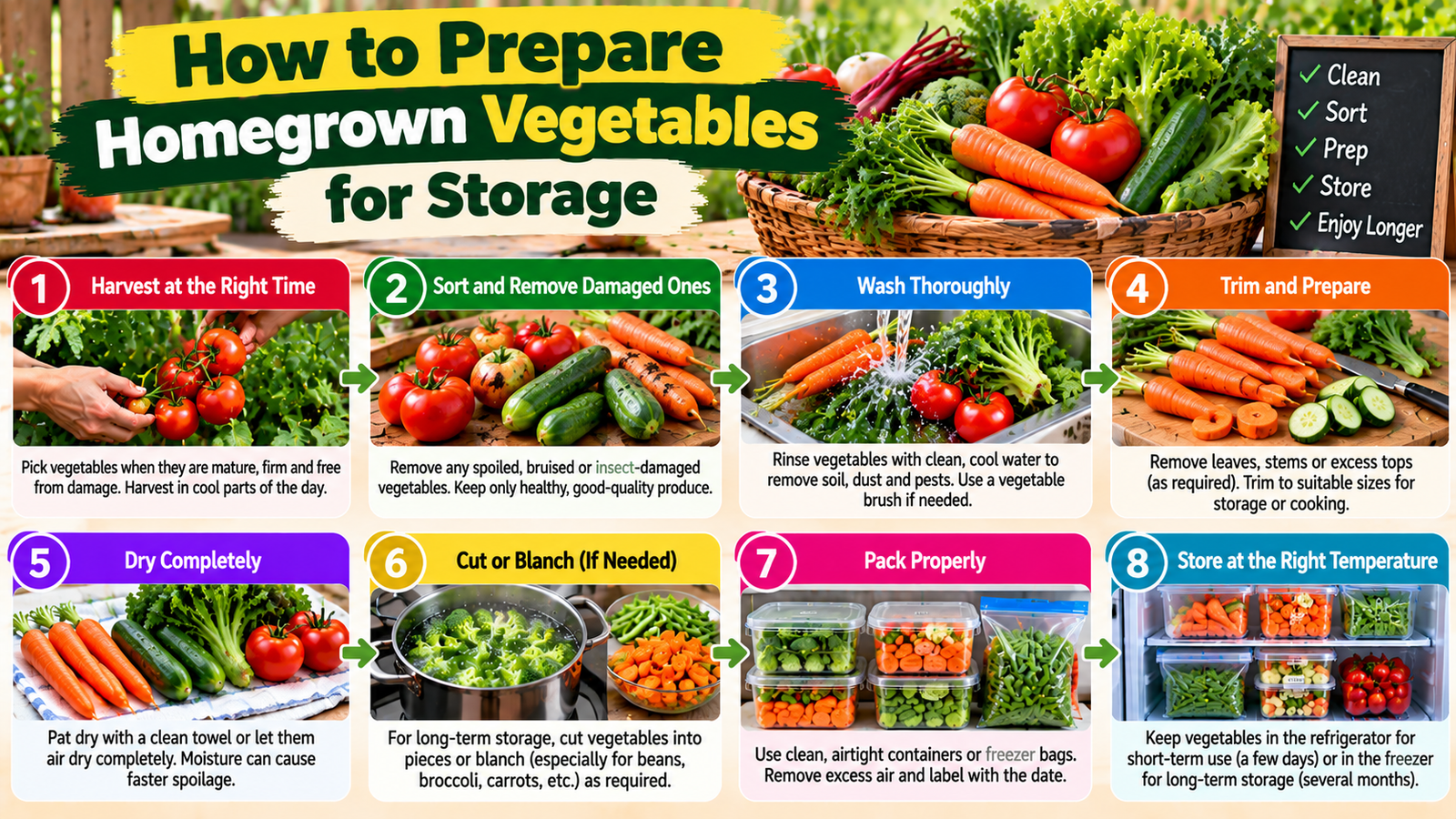
Harvest Vegetables at the Right Time
Storage starts with harvesting.
I try to harvest vegetables when they have reached the appropriate stage for their variety. Some vegetables are best harvested while young and tender, while others can remain on the plant longer.
Harvesting during cooler parts of the day can also be helpful because vegetables may be less exposed to heat.
Handle Vegetables Carefully
Fresh vegetables can be damaged easily after harvest. Bruises, cuts, and scratches can reduce storage quality.
I handle vegetables gently and avoid dropping them into baskets or containers.
When harvesting, I use appropriate tools when necessary rather than pulling vegetables roughly from the plant.
Careful handling gives vegetables a better chance of staying fresh.
Remove Damaged Produce
Before storing my garden harvest, I inspect each vegetable.
Vegetables with serious damage, mold, or signs of decay should be separated from healthy produce.
A damaged vegetable may deteriorate faster and can sometimes affect produce stored nearby.
I prefer to use slightly imperfect vegetables first if they are still suitable for eating.
Remove Unnecessary Leaves
Some vegetables should have their leaves removed before storage.
For example, carrot greens can draw moisture from the roots, causing carrots to lose firmness.
Removing unnecessary leaves also makes vegetables easier to organize and store.
The leaves themselves may sometimes be used separately if they are fresh and suitable.
Remove Loose Soil
Root vegetables often come from the garden with soil attached.
I gently remove loose soil before storage rather than aggressively washing every vegetable.
Whether a vegetable should be washed before storage depends on the type of vegetable and the storage method.
The main goal is to avoid storing produce while it is excessively wet.
Dry Vegetables Properly
Moisture is an important part of vegetable storage.
Too much moisture can encourage mold and decay, while too little moisture can cause vegetables to become dry and limp.
If vegetables have been washed, I allow them to dry properly before placing them into storage containers.
I avoid sealing wet vegetables inside containers for long periods.
Sort Vegetables by Type
Different vegetables have different storage requirements, so I separate them after harvesting.
Leafy vegetables may need cool and humid conditions, while root vegetables often need different storage arrangements.
Sorting the harvest makes it easier to give each vegetable the conditions it needs.
Prepare Leafy Vegetables
Leafy greens require special attention because they can wilt quickly.
I remove damaged leaves and gently dry the greens. If necessary, I use clean paper towels to absorb extra moisture.
I then place the greens in a suitable storage bag or container and refrigerate them.
Prepare Root Vegetables
Root vegetables such as carrots and radishes can be prepared by removing their leafy tops and gently removing loose soil.
I avoid keeping them excessively wet.
Cool storage can help preserve their firmness and quality.
Prepare Tomatoes Separately
Tomatoes are different from many other garden vegetables.
I sort tomatoes according to their ripeness. Green tomatoes and ripe tomatoes may need different storage conditions.
I also handle tomatoes carefully because bruising can quickly lead to soft spots.
Use Appropriate Containers
Storage containers should match the vegetable.
Some vegetables benefit from containers that maintain humidity, while others need more airflow.
I avoid assuming that one container will work perfectly for every type of vegetable.
Simple produce bags, breathable containers, and suitable refrigerator drawers can all be useful.
Label Large Harvests
When I have a large harvest, labeling can make storage easier.
I can write the vegetable type and harvest date on a container or bag.
This helps me remember which vegetables should be used first.
Check Stored Vegetables Regularly
Preparing vegetables for storage is only the beginning.
I check stored vegetables regularly for soft spots, mold, excessive moisture, or other signs of deterioration.
If something is starting to spoil, I remove it before it affects nearby produce.
Final Thoughts
Preparing homegrown vegetables for storage does not require complicated equipment. Careful harvesting, gentle handling, sorting, removing damaged parts, controlling moisture, and choosing suitable storage conditions can make a major difference.
I have found that the more carefully I prepare my harvest, the easier it becomes to enjoy fresh vegetables for longer.
A little extra attention immediately after harvesting can help protect the time and effort invested in growing a home vegetable garden.