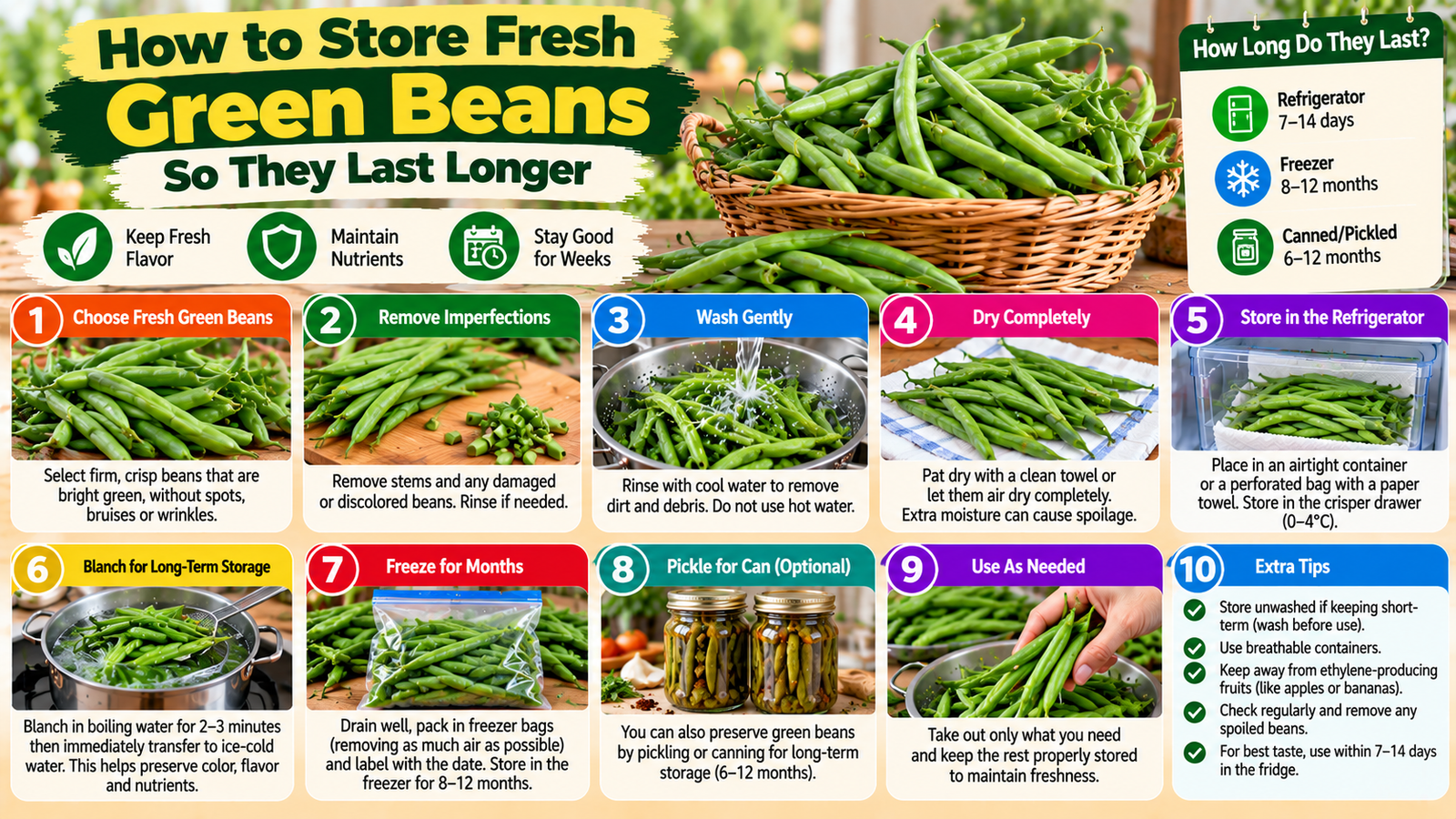
Fresh green beans are one of those vegetables that taste especially good when they are recently harvested. I enjoy using them in simple meals because they are easy to prepare and work well with many different dishes. However, green beans can lose their crisp texture fairly quickly if they are not stored properly.
Whether you grow green beans in your home garden or buy them from a local market, knowing how to store fresh green beans can help them stay crisp, colorful, and enjoyable for longer. I have found that the most important things are choosing fresh beans, keeping them cool, controlling moisture, and avoiding unnecessary handling.
Choose Fresh Green Beans First
Good storage starts with good quality vegetables. When I pick or buy green beans, I look for beans that feel firm and have a fresh appearance.
Fresh green beans should generally be crisp and firm rather than soft or limp. I also avoid beans with large brown areas, excessive wrinkles, mold, or obvious damage.
Starting with fresh beans gives them a better chance of staying fresh during storage.
Do Not Wash Green Beans Too Early
One of the simplest storage habits I follow is avoiding unnecessary washing before storage.
Water left on the surface of green beans can increase moisture inside the storage container. Excess moisture may encourage mold and decay.
If the beans are reasonably clean, I prefer to wash them shortly before cooking or eating them.
If I do wash them before storage, I make sure they are dried properly before putting them away.
Keep Green Beans Cool
Fresh green beans generally benefit from cool storage. The refrigerator is usually the most convenient option for keeping them fresh at home.
I place green beans in the vegetable drawer or another suitable area of the refrigerator.
Keeping them cool helps slow the natural changes that happen after harvesting and can help preserve their crisp texture.
Use a Suitable Storage Bag
The storage container can make a noticeable difference. I prefer using a suitable produce bag or container that protects the green beans without trapping excessive moisture.
A completely sealed container can sometimes create condensation, especially if the beans were not completely dry.
A storage bag that provides a little ventilation can be useful for maintaining a better balance between humidity and airflow.
Add a Paper Towel
A simple paper towel can help manage excess moisture.
I sometimes place a clean paper towel inside the storage bag or container with the green beans. The towel can absorb moisture that would otherwise collect around the vegetables.
If the paper towel becomes noticeably wet, I replace it with a dry one.
This small step can help reduce the chance of the beans becoming slimy.
Avoid Packing the Beans Too Tightly
I try not to crush green beans when storing them.
If too many beans are packed tightly into one container, the ones at the bottom can become damaged. Bruised or broken beans may deteriorate faster.
Using a container that gives the beans enough room can help prevent unnecessary physical damage.
Keep Green Beans Away From Excess Heat
Heat can cause fresh green beans to lose quality quickly.
After harvesting, I avoid leaving them in direct sunlight or in a warm place for a long period.
If I pick beans from my garden, I bring them indoors and move them to a cool storage environment as soon as practical.
This is especially important during hot weather.
Check Green Beans Regularly
I recommend checking stored green beans every couple of days.
Look for soft spots, discoloration, sliminess, mold, or an unusual smell. If one bean has clearly spoiled, I remove it from the container.
Checking the beans regularly also reminds me to use them while they are still at their best.
Use Older Beans First
If I harvest green beans on different days, I organize them so that older beans are used first.
This simple habit helps prevent older produce from being forgotten behind newer vegetables.
I can plan a meal around the beans that have been stored the longest and save the fresher ones for later.
Do Not Remove the Ends Until Necessary
Green beans can be stored whole rather than trimmed.
I usually leave the ends attached until I am ready to prepare the beans for cooking. Cutting them earlier creates additional exposed surfaces and can make preparation more complicated than necessary.
Keeping the beans intact during storage is a simple way to protect their quality.
How to Prepare Green Beans Before Cooking
When I am ready to use the beans, I wash them under clean running water and remove the ends if needed.
I then prepare them according to the meal I am making.
Fresh green beans can be steamed, boiled, roasted, sautéed, or added to soups and other dishes.
The fresher the beans are, the more likely they are to have that pleasant crisp texture that makes them enjoyable.
What If Green Beans Become Slightly Limp?
Sometimes green beans lose some firmness during storage without actually being spoiled.
If they are still clean, smell normal, and show no signs of decay, they may still be suitable for cooking.
I prefer using slightly older beans in cooked dishes rather than expecting them to have the same crispness as freshly harvested beans.
However, beans with mold, a bad smell, or clear spoilage should not be used.
Freeze Extra Green Beans
If I have more green beans than I can eat while they are fresh, freezing can be a useful option.
For better quality after freezing, green beans are generally prepared before being frozen. A common approach is to briefly blanch them and then cool them quickly before freezing.
This can help preserve their color, texture, and quality for later use.
Frozen green beans can be useful in soups, stews, vegetable dishes, and many other cooked meals.
Harvest Green Beans Regularly
If you grow green beans at home, harvesting regularly can make storage much easier.
Instead of allowing a large number of beans to become ready at the same time, I check the plants frequently and harvest beans when they reach the desired size.
Regular harvesting can also encourage continued production on many green bean plants.
Avoid Storing Damaged Beans
Before putting green beans into storage, I separate any beans that are badly bruised, broken, or showing signs of spoilage.
Damaged vegetables generally do not store as well as healthy ones.
Using slightly imperfect beans first can help reduce waste while protecting the better quality beans.
Final Thoughts
Learning how to store fresh green beans so they last longer is mostly about keeping them cool, dry, protected, and properly organized.
I have found that choosing fresh beans, avoiding unnecessary washing, using a suitable storage bag, controlling moisture with a paper towel, and checking the beans regularly can make a noticeable difference.
If you grow green beans yourself, regular harvesting and careful handling can make the harvest easier to manage. When there are more beans than you can eat fresh, freezing can provide another useful option.
Fresh green beans are simple vegetables, but good storage habits can help preserve their crisp texture and fresh flavor. With a little care, you can enjoy more of your harvest and reduce unnecessary vegetable waste.