

A garden can be much more than a place to grow vegetables. With the right flowers, it can become a welcoming space for bees, butterflies, and other helpful pollinators. When I plan a garden, I like to include flowers because they add color and beauty while also supporting beneficial insects.
Choosing the best flowers for a pollinator friendly garden does not have to be difficult. The main idea is to provide nectar and pollen while creating a variety of flowers that bloom at different times.
Why Flowers Matter to Pollinators
Flowers provide important food resources for many pollinators. Bees collect nectar and pollen, while butterflies mainly depend on nectar as adult insects.
Different flowers offer different amounts and types of food. Flower shape can also affect which insects can reach the nectar.
This is why I prefer growing several types of flowers rather than filling the entire garden with one variety.
Sunflowers
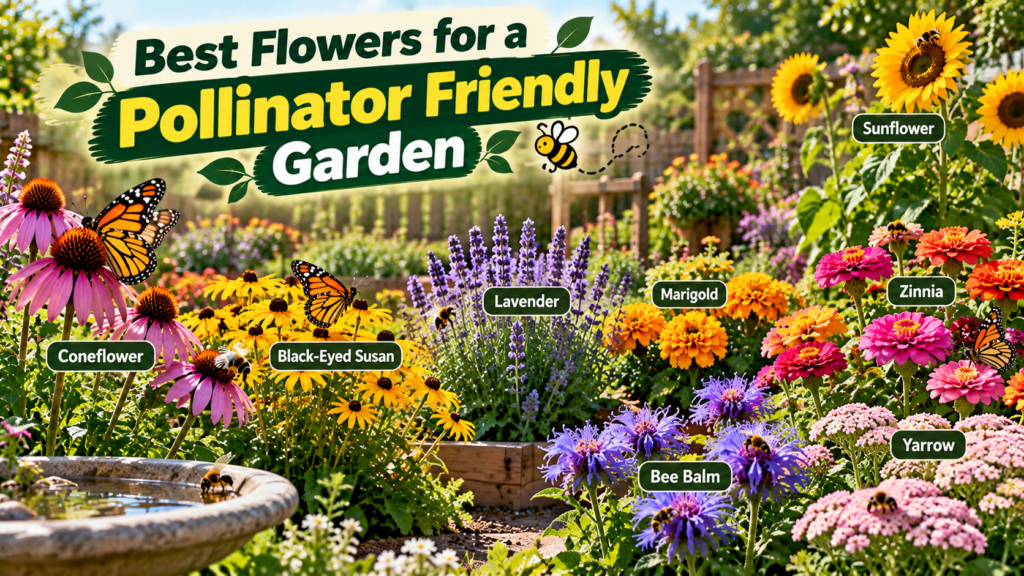
Sunflowers are one of my favorite choices for a pollinator friendly garden. They are easy to recognize, grow well in sunny locations, and can attract bees and other insects.
Their large flower heads also make them visually attractive in a vegetable garden.
Sunflowers can be grown along garden borders or in areas where their height will not shade smaller vegetables.
Zinnias
Zinnias are another excellent choice for attracting pollinators. They come in many colors and can provide flowers for an extended period when properly maintained.
Their colorful blooms can attract butterflies and bees, making them useful in both flower and vegetable gardens.
I particularly like zinnias because they can add a cheerful appearance without requiring a complicated garden design.
Lavender
Lavender is well known for its pleasant fragrance, but it can also be useful in a pollinator garden.
Its purple flowers can attract bees and other beneficial insects. Lavender generally prefers sunny conditions and well drained soil.
It can work particularly well around garden edges or in dedicated flower areas.
Cosmos
Cosmos are attractive flowering plants that can be useful for pollinators. Their open flowers make it easier for many insects to reach the center of the bloom.
They can add height and movement to a garden while providing nectar for visiting insects.
For gardeners who want a relaxed and natural appearance, cosmos can be a good choice.
Marigolds
Marigolds are popular in vegetable gardens because they are easy to grow and produce bright flowers.
They can attract pollinators and add color around vegetable beds.
I like using marigolds as border plants because they can visually separate different areas of the garden while still contributing to the overall pollinator friendly environment.
Native Flowering Plants
One of the most important suggestions I can give is to consider native flowers.
Native plants are naturally adapted to local environmental conditions and may provide valuable resources for local pollinators.
Instead of choosing flowers only because they look attractive, I recommend checking which flowering plants naturally grow well in your region.
A combination of native flowers and other suitable garden plants can create a more diverse environment.
Choose Different Flower Shapes
Not all pollinators interact with flowers in the same way. Some insects can reach deep into tubular flowers while others prefer open blooms.
Growing flowers with different shapes can therefore support a greater variety of insects.
This is one reason I believe diversity is more useful than simply planting many flowers of the same type.
Grow Flowers With Different Blooming Periods
A pollinator friendly garden should ideally provide flowers for as much of the growing season as possible.
If all flowers bloom during one short period, pollinators may have fewer resources later.
By combining early, middle, and late blooming plants, you can create a garden that remains useful for a longer time.
Avoid Excessive Garden Chemicals
Flowers alone are not enough if the garden environment is harmful to beneficial insects.
Unnecessary pesticide use can affect pollinators and other helpful insects. Before treating a garden problem, it is important to identify the actual pest and determine whether control is necessary.
I prefer prevention, observation, and gentle garden management whenever possible.
Provide Water
Pollinators also need water. A shallow water container can be placed near flowers.
Small stones can provide landing surfaces and make the water safer for insects.
Keeping the water fresh is important, especially during warm weather.
Leave Some Natural Areas
A pollinator friendly garden does not have to be perfectly clean.
Some natural areas can provide shelter and nesting opportunities for insects. Fallen leaves, natural soil areas, and suitable plant material can contribute to a healthier garden environment.
Of course, diseased plants and invasive weeds should still be managed properly.
Combine Flowers With Vegetables
Flowers and vegetables can grow together successfully in many gardens.
Planting flowers near cucumbers, squash, pumpkins, peppers, tomatoes, and other crops can create a diverse garden environment.
The flowers attract insects while the vegetables provide food for the gardener.
This combination is one of my favorite ways to make a small garden more useful.
Container Flowers Can Also Help
People with limited garden space can still create a pollinator friendly area.
Containers filled with flowering plants can be placed on balconies, patios, entrances, or small outdoor spaces.
Even a few flowering containers can provide valuable resources for visiting insects.
Final Thoughts
The best flowers for a pollinator friendly garden are not necessarily the most expensive or unusual varieties. Good choices are plants that provide nectar or pollen, grow well in your climate, and bloom at different times.
Sunflowers, zinnias, lavender, cosmos, marigolds, and suitable native plants can all contribute to a welcoming environment.
From my point of view, a successful pollinator garden should look natural, colorful, and diverse. When you combine flowers with vegetables and avoid unnecessary disturbance, you create a space that benefits both your garden and the insects that help it thrive.


