
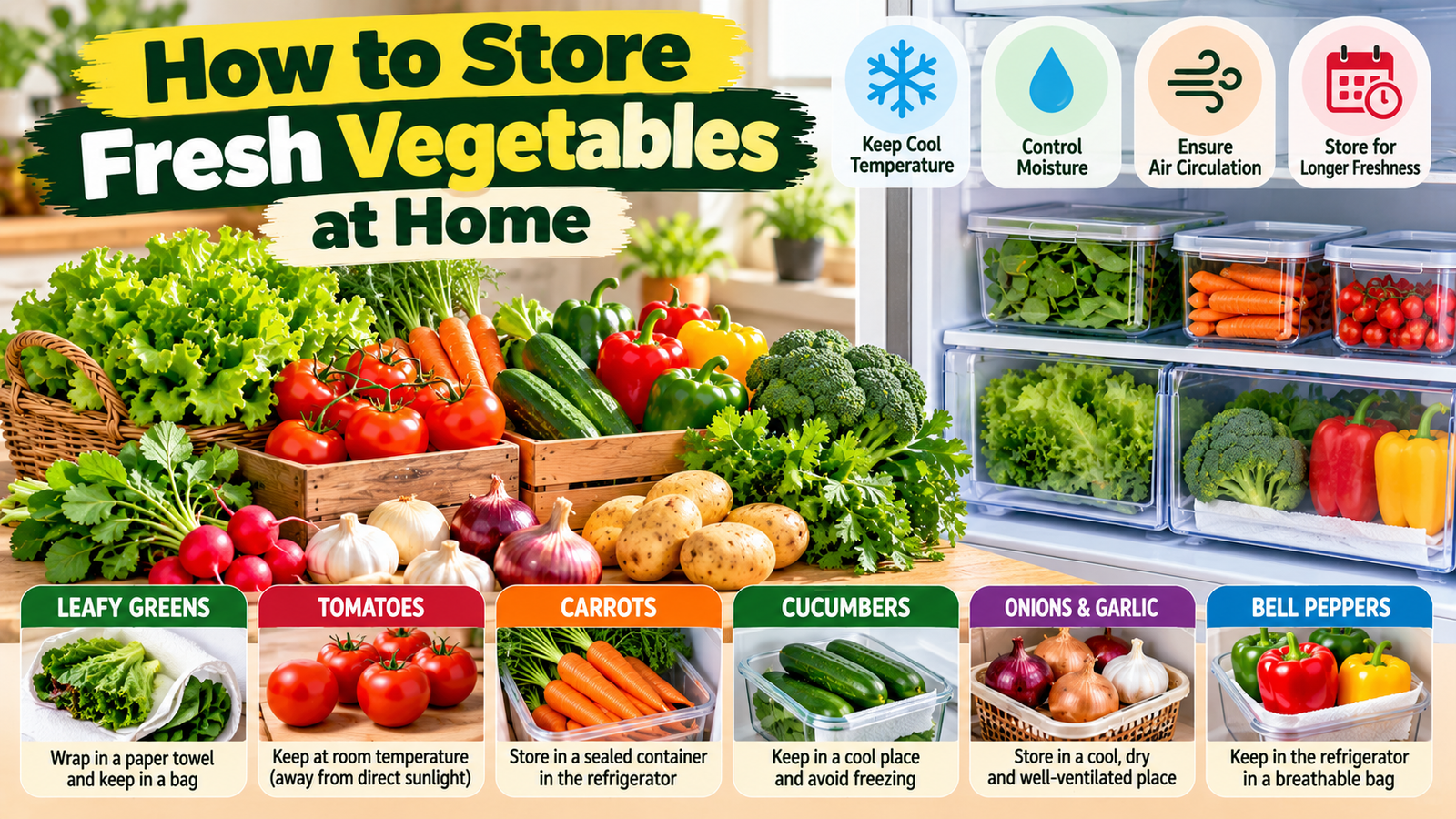
When I bring fresh vegetables home from the market or garden, I always want them to stay fresh for as long as possible. There is nothing more disappointing than opening the refrigerator after a few days and finding vegetables that have become soft, dry, wilted, or spoiled. Proper vegetable storage can make a big difference in freshness, taste, and food waste.
I have learned that different vegetables need different storage conditions. Some vegetables prefer the refrigerator, while others can lose their quality when kept in very cold conditions. Understanding these simple differences can help anyone keep fresh vegetables at home for longer.
Why Proper Vegetable Storage Matters
Fresh vegetables contain a lot of water, and they continue to change after harvesting. Some lose moisture quickly, while others become damaged when exposed to too much moisture. Proper storage helps slow these changes and keeps vegetables crisp and enjoyable.
Good storage can also reduce food waste. When vegetables stay fresh longer, I can use them in more meals instead of throwing them away. This is especially useful when buying vegetables in larger quantities or harvesting vegetables from a home garden.
Sort Vegetables Before Storing
The first thing I recommend doing is checking the vegetables before putting them away. Remove anything that is already damaged, bruised, or showing signs of decay.
One spoiled vegetable can sometimes affect nearby vegetables. For this reason, I prefer to separate damaged produce from healthy produce.
I also avoid storing vegetables while they are extremely wet. Excess moisture can encourage mold and decay. If vegetables need washing, I usually wash them before use unless there is a specific reason to wash them earlier.
Use the Refrigerator Wisely
Many vegetables stay fresh longer in the refrigerator. Leafy greens, carrots, cucumbers, peppers, broccoli, and many other vegetables generally benefit from cool storage.
The vegetable drawer is often a good place to store fresh produce because it helps maintain a suitable environment. However, I do not simply put every vegetable into the refrigerator without thinking about its storage needs.
Some vegetables are sensitive to very cold temperatures, so knowing the right place for each type can help preserve quality.
Control Moisture
Moisture is one of the most important factors when storing vegetables. Too little moisture can cause vegetables to become dry and limp, while too much moisture can encourage mold.
For leafy vegetables, I usually wrap them loosely in a paper towel before placing them inside a breathable bag or container. The paper towel can help absorb excess moisture while keeping the leaves from drying too quickly.
For other vegetables, a clean and dry storage container may be enough.
Store Vegetables in Suitable Containers
The container you choose can affect how long vegetables remain fresh. Airtight containers are useful for some vegetables, but they are not always the best choice for fresh produce.
Some vegetables need airflow, while others benefit from a more humid environment. Reusable produce bags, storage containers with ventilation, and simple plastic bags with small openings can all be useful depending on the vegetable.
I prefer simple storage methods that do not require expensive equipment.
Keep Ethylene Producing Vegetables Separate
Some fruits and vegetables release a natural gas called ethylene as they ripen. Ethylene can cause certain nearby produce to mature and spoil faster.
Tomatoes, for example, can produce ethylene. I try not to place sensitive vegetables right next to large amounts of ripe tomatoes.
Keeping different types of produce separated can help reduce unwanted changes in texture and freshness.
How to Store Root Vegetables
Root vegetables such as carrots, beets, and radishes can often stay fresh for a good amount of time when stored correctly.
If carrots have green tops attached, I prefer to remove the tops before storage. The leaves can draw moisture from the roots and cause carrots to become soft more quickly.
Carrots can be stored in the refrigerator in a suitable bag or container. Keeping them cool and preventing excessive moisture loss helps maintain their crisp texture.
How to Store Tomatoes
Tomatoes require a little more attention. Fully ripe tomatoes generally taste better when stored at room temperature rather than in the refrigerator.
I keep ripe tomatoes away from direct sunlight and use them within a reasonable period. If tomatoes become very ripe and I cannot use them quickly, refrigeration can help slow further ripening, although the texture and flavor may change.
For tomatoes that are not fully ripe, room temperature storage can help them continue developing.
How to Store Leafy Vegetables
Leafy vegetables such as lettuce, spinach, and other greens can lose moisture quickly. I find that keeping them dry but not completely exposed to air works best.
After removing damaged leaves, I gently dry the greens and wrap them in paper towels. I then place them in a suitable storage bag or container.
Checking them every few days is also useful. If one leaf starts to decay, removing it can help protect the rest.
Do Not Overcrowd the Refrigerator
Another simple habit I find helpful is avoiding overcrowding. When the refrigerator is packed too tightly, air cannot move properly around the vegetables.
Leaving some space between produce can help maintain more consistent conditions. It also makes it easier to see what vegetables I have available and use them before they become old.
Store Vegetables According to When You Will Use Them
I also like to organize vegetables according to how soon I plan to use them. Vegetables that are already very ripe or delicate should usually be used first.
Harder vegetables such as carrots can often wait longer. More delicate greens should be placed somewhere visible so I remember to use them quickly.
This simple organization can reduce unnecessary food waste.
Check Your Vegetables Regularly
Vegetable storage does not end when the vegetables go into the refrigerator. I recommend checking them regularly.
Look for soft spots, unusual smells, mold, discoloration, or excessive moisture. Removing vegetables that have clearly spoiled helps prevent problems from spreading to other produce.
A quick check every few days takes only a few minutes and can save a lot of food.
Final Thoughts
Learning how to store fresh vegetables at home does not have to be complicated. The main idea is to understand that different vegetables have different needs.
I have found that keeping vegetables clean, managing moisture, using the refrigerator properly, avoiding overcrowding, and checking produce regularly can make a noticeable difference.
With a few simple storage habits, fresh vegetables can stay crisp, tasty, and useful for longer. Whether the vegetables come from a grocery store, local market, or your own garden, proper storage is one of the easiest ways to enjoy more of your harvest while reducing food waste.


