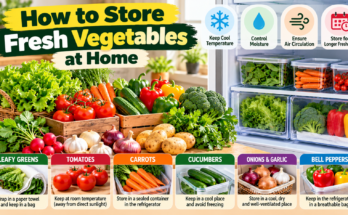
Leafy vegetables are some of the healthiest and most useful foods I like to keep at home, but they can also be some of the hardest vegetables to store. Lettuce, spinach, kale, Swiss chard, and other leafy greens can lose their freshness quickly if they are exposed to too much moisture or allowed to dry out.
The good news is that learning how to keep leafy vegetables fresh longer is quite simple. With the right preparation, storage container, and refrigerator conditions, leafy greens can remain crisp and useful for much longer.
Why Leafy Vegetables Wilt Quickly
Leafy vegetables contain a large amount of water. After harvesting, they continue to lose moisture. When they lose too much water, their leaves become soft and wilted.
At the same time, too much moisture can encourage mold and decay. This means the goal is not simply to keep leafy vegetables wet. The goal is to maintain the right balance of moisture.
Remove Damaged Leaves First
When I bring leafy vegetables home, I first check them carefully. Any leaves that are badly damaged, slimy, or already spoiled should be removed.
Damaged leaves can affect the surrounding leaves and make the entire bunch deteriorate faster.
I also remove very yellow or broken leaves when necessary. This gives the healthier leaves more space and makes the vegetables easier to store.
Avoid Excess Water
One of the most important tips for keeping leafy vegetables fresh longer is controlling excess water.
If the leaves are soaking wet, they can become slimy or develop mold. I prefer to gently dry them before storage.
A salad spinner can make this process easier, but it is not essential. You can also gently pat the leaves dry with clean kitchen towels or paper towels.
Use Paper Towels
Paper towels are one of the simplest storage tools for leafy vegetables. I usually place a paper towel around the greens or inside their storage container.
The paper towel absorbs excess moisture and helps prevent the leaves from sitting in water.
If the towel becomes very wet, replacing it with a dry one can help maintain a better storage environment.
Choose the Right Container
A good storage container can make a major difference. I prefer containers or bags that provide some protection while allowing excess moisture to escape.
A completely sealed container may trap too much moisture, especially if the greens were not completely dry before storage.
A container with some ventilation or a suitable produce storage bag can work well.
Keep Leafy Greens in the Refrigerator
Leafy vegetables generally benefit from cool storage. The refrigerator helps slow the natural deterioration process and keeps the leaves crisp.
I usually keep them in the vegetable drawer or another suitable refrigerator area.
It is also helpful to avoid placing heavy items on top of delicate greens. Crushed leaves can deteriorate much faster.
Store Different Greens Carefully
Not every leafy vegetable behaves exactly the same way. Spinach is delicate and can become soft quickly, while kale is usually more durable.
Lettuce can also remain fresh for a good amount of time when it is stored properly.
For very delicate greens, I take extra care to avoid excess water and physical damage.
Do Not Wash Everything Too Early
Although washing vegetables before storage can be convenient, it is not always necessary. If the greens are already clean, keeping them dry until you are ready to use them may make storage easier.
If I wash leafy vegetables before storage, I make sure they are properly dried first.
The key is avoiding trapped water.
Check the Greens Regularly
I recommend checking stored leafy vegetables every couple of days. Look for leaves that have become slimy, brown, or moldy.
Removing damaged leaves early can help protect the rest of the greens.
This also reminds me to use older greens first instead of allowing them to sit forgotten in the refrigerator.
Keep Greens Away From Excess Moisture
Moisture can come from more than washing. Condensation inside a storage bag or container can also create problems.
If I notice a lot of condensation, I open the container briefly and replace any wet paper towel.
This small step can help extend the freshness of leafy vegetables.
How to Revive Wilted Greens
Sometimes leafy vegetables become slightly wilted even when they are still perfectly usable. In many cases, they can be refreshed.
I place the greens in cold water for a short period and then drain them well. The leaves can absorb some water and regain a firmer texture.
This works best when the vegetables are wilted but not spoiled.
If the leaves are slimy, moldy, or have an unpleasant smell, they should not be used.
Use Older Greens First
One habit that helps me reduce food waste is organizing vegetables based on freshness.
If I have one container of greens that I purchased earlier and another that is newer, I use the older one first.
This simple first in, first out approach helps prevent vegetables from being forgotten.
Grow and Harvest Only What You Need
If you grow leafy vegetables at home, you have another advantage. You do not always need to harvest the entire plant.
Many leafy greens can be harvested gradually, depending on the plant. Taking only what you need means the remaining vegetables can continue growing in the garden.
This can provide a steady supply of fresh greens without requiring long term storage.

Final Thoughts
Keeping leafy vegetables fresh longer is mostly about controlling moisture and temperature. I have found that gently drying the leaves, using paper towels, choosing a suitable container, and storing them in the refrigerator can make a big difference.
It is also important to check leafy greens regularly and remove damaged leaves before they affect the rest.
With these simple habits, lettuce, spinach, kale, and other leafy vegetables can stay fresh, crisp, and ready for meals for much longer.