Fresh tomatoes are one of my favorite vegetables to grow and use in everyday cooking. They are useful in salads, sandwiches, sauces, soups, and many other meals. However, storing tomatoes properly can sometimes be confusing because the best storage method depends on how ripe they are.
I have learned that tomatoes usually need more attention than vegetables such as carrots or broccoli. Keeping them at the right temperature and handling them gently can help preserve their flavor and texture.
Understand Tomato Ripeness
The first thing I consider when storing tomatoes is their ripeness.
A tomato that is still firm and not fully ripe usually needs time to develop its flavor. A fully ripe tomato, on the other hand, is ready to eat and may need to be used quickly.
Knowing the ripeness stage makes it easier to decide where to store it.
Keep Unripe Tomatoes at Room Temperature
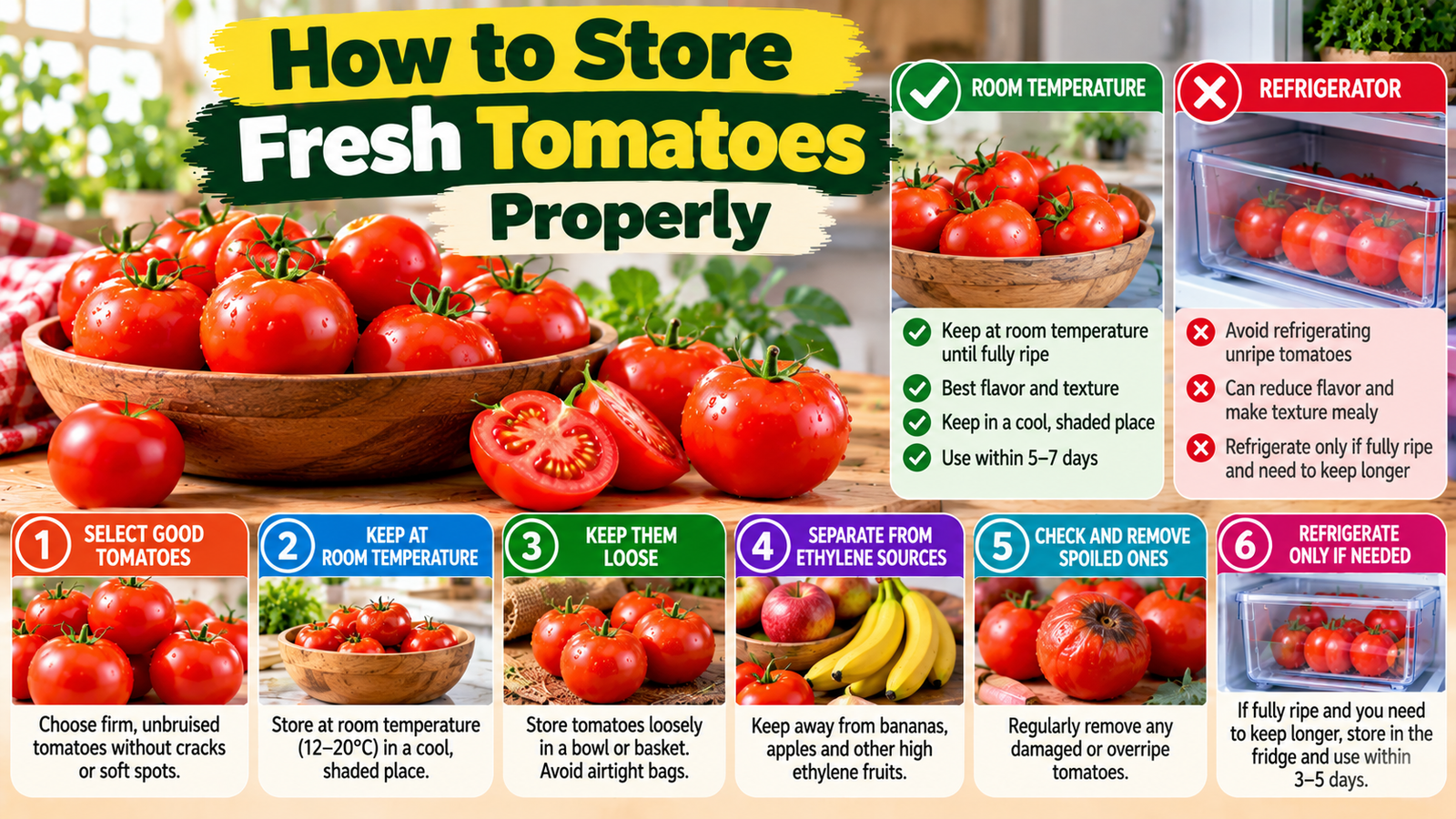
When tomatoes are not fully ripe, I generally keep them at room temperature. A clean counter away from direct sunlight can be a good place.
Tomatoes can continue to ripen naturally under these conditions.
I avoid placing unripe tomatoes in a very cold environment because low temperatures can affect their texture and flavor.
Keep Ripe Tomatoes Away From Direct Sunlight
Once tomatoes are ripe, I keep them away from direct sunlight and excessive heat.
Direct sunlight can warm the tomatoes and speed up changes in quality. A shaded, well ventilated area is usually more suitable for short term storage.
I also avoid stacking tomatoes heavily because pressure can create bruises.
Handle Tomatoes Gently
Tomatoes can be surprisingly delicate. Even a small bruise can become a soft spot later.
When moving tomatoes, I try not to squeeze them. If several tomatoes are stored together, I avoid placing heavy objects on top of them.
Gentle handling is especially important with garden fresh tomatoes that may have softer skins.
Should Tomatoes Be Refrigerated?
This is one of the most common questions about tomato storage.
For fully ripe tomatoes that need to be kept for a little longer, refrigeration can slow further ripening. However, cold temperatures can affect the texture and flavor of tomatoes.
For this reason, I prefer to use ripe tomatoes promptly when possible. If I have more tomatoes than I can use, refrigeration may be practical for short term storage.
After refrigeration, allowing tomatoes to return toward room temperature before eating can improve the eating experience.
Store Tomatoes Stem Side Down
I often place tomatoes with the stem area facing downward when storing them on a counter.
This can reduce moisture loss through the area where the tomato was attached to the plant and may help the tomato remain firm.
More importantly, I make sure tomatoes are not resting on damaged areas.
Keep Damaged Tomatoes Separate
If one tomato has a large crack, bruise, or soft spot, I separate it from the others.
Damaged tomatoes tend to spoil faster. Using them first is a simple way to reduce waste.
I also check tomatoes regularly rather than leaving them untouched for several days.
Do Not Wash Tomatoes Before Long Storage
I prefer not to wash tomatoes until I am ready to use them unless there is a specific reason to do so.
Excess moisture on the surface can increase the chance of spoilage.
If tomatoes need washing, I wash them gently and dry them properly before use.
Store Garden Tomatoes Carefully
Homegrown tomatoes can vary significantly in size, firmness, and ripeness. This makes sorting especially useful.
I separate ripe tomatoes from green or partially ripe tomatoes. This allows me to use the ripe ones first while giving the others more time to develop.
It also makes it easier to notice when a tomato needs attention.
What About Cut Tomatoes?
Once a tomato has been cut, the storage approach changes.
I place leftover cut tomatoes in a clean covered container and refrigerate them. Because cut produce is more exposed to air and contamination, I use it as soon as reasonably possible.
Before eating refrigerated tomatoes, I check their appearance, smell, and texture.
Avoid Excessive Heat
Hot environments can cause tomatoes to become soft quickly. During warm weather, I pay extra attention to where I store them.
A cool shaded area is preferable to a hot kitchen counter near a stove, oven, or window receiving strong sunlight.
Use Ripe Tomatoes First
When I have several tomatoes at different stages of ripeness, I always use the ripest ones first.
This simple habit prevents tomatoes from becoming overripe before I have a chance to use them.
If I know I will not use them quickly, I can plan meals around them, such as fresh salads, sauces, sandwiches, or cooked dishes.
Final Thoughts
Learning how to store fresh tomatoes properly can help preserve their flavor and reduce food waste. The most important thing is to consider ripeness, temperature, moisture, and handling.
Unripe tomatoes generally benefit from room temperature storage, while fully ripe tomatoes should be used relatively quickly. Refrigeration can be useful when necessary, but it may affect texture and flavor.
With gentle handling and regular checking, fresh tomatoes can remain enjoyable for longer and become a reliable part of everyday meals.