Fresh carrots are one of the easiest vegetables to keep at home when they are stored properly. They are useful in salads, soups, stews, snacks, and many cooked dishes. I also like carrots because they can remain firm for a relatively long time compared with more delicate vegetables.
However, fresh carrots can become soft, dry, or limp if they are not stored correctly. The good news is that learning how to store fresh carrots at home does not require complicated equipment.
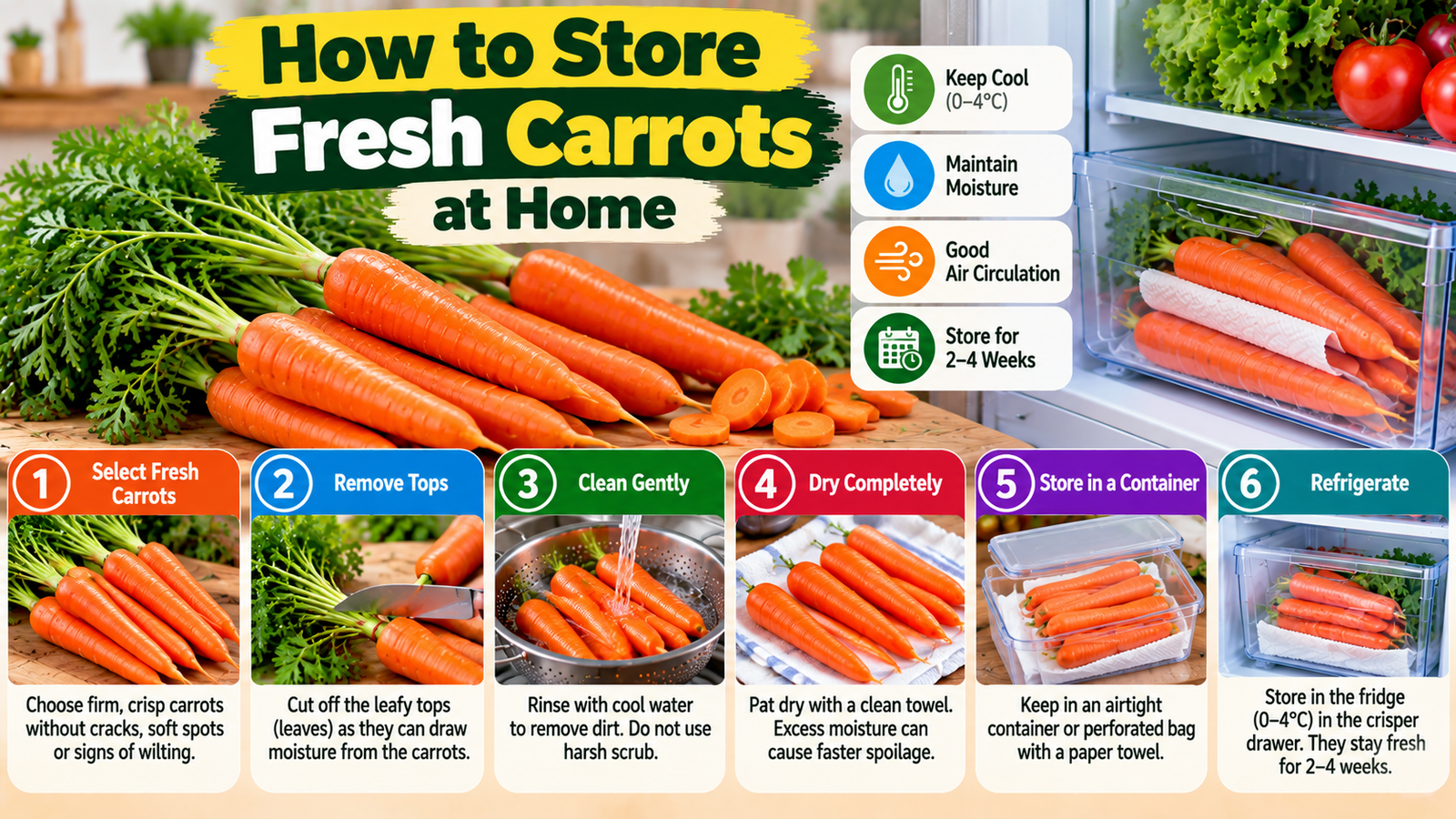
Remove Carrot Tops Before Storage
If I harvest carrots from a home garden with green tops attached, one of the first things I do is remove the tops.
The green leaves continue using moisture after harvest. Leaving them attached can cause the carrot roots to lose moisture and become soft more quickly.
The carrot tops can still be used in some recipes, but I store them separately.
Do Not Leave Fresh Carrots in Direct Sunlight
After harvesting or buying carrots, I keep them away from direct sunlight and excessive heat.
A cool storage environment is better for maintaining their quality.
If carrots are freshly harvested, I move them to a suitable storage area rather than leaving them outside for a long time.
Keep Carrots Cool
The refrigerator is one of the easiest options for storing fresh carrots at home.
I usually place carrots in the vegetable drawer because it provides a suitable cool environment.
Keeping carrots cool slows moisture loss and helps them remain firm.
Control Moisture
Carrots need enough moisture to remain crisp, but too much moisture can encourage mold and decay.
I avoid storing wet carrots in a tightly sealed bag. If carrots are damp, I gently dry them before placing them into a storage container or suitable produce bag.
A paper towel can also help absorb excess moisture.
Store Carrots in a Bag or Container
A suitable storage bag or container can protect carrots from drying out.
I prefer a method that provides some protection while avoiding excessive condensation.
If I notice a lot of moisture inside the container, I remove the carrots briefly and replace the damp paper towel or adjust the storage method.
Keep Carrots Away From Strong Odors
Carrots can absorb odors from nearby foods. For this reason, I try to keep them away from strongly scented foods when possible.
A clean storage container with a suitable cover can also help protect them from refrigerator odors.
Do Not Wash Carrots Too Early
If carrots are already clean, I often store them without washing and clean them when I am ready to use them.
If I wash carrots before storage, I make sure they are dried properly.
The main goal is to avoid leaving excess water trapped around the carrots.
Check Carrots Regularly
Even vegetables that store well should be checked from time to time.
I look for soft spots, mold, unusual discoloration, or unpleasant smells. Any carrot that has clearly spoiled should be removed.
If one carrot is becoming soft while the others are still healthy, I use it first if it is still suitable to eat.
How to Keep Carrots Crisp
If carrots have become slightly limp but are not spoiled, soaking them in clean cold water for a short period can sometimes help restore some crispness.
After refreshing them, I drain them properly before using them.
This can be particularly useful when carrots have lost some moisture during storage.
Store Garden Carrots Carefully
Homegrown carrots can come out of the soil with dirt attached. I do not always wash all the dirt away immediately.
Instead, I gently remove loose soil and prepare the carrots for cool storage.
If the carrots are muddy or wet, I allow them to dry appropriately before long term storage rather than sealing wet roots in a container.
Use Older Carrots First
When I have several batches of carrots, I use the older ones first.
This simple organization prevents carrots from being forgotten at the back of the refrigerator.
I also plan meals around vegetables that need to be used sooner.
Can Carrots Be Frozen?
If I have more carrots than I can use while they are fresh, freezing can be an option.
For the best quality, carrots are generally prepared before freezing rather than simply placing raw carrots directly into the freezer.
This can be useful when there is a large garden harvest and I want to preserve carrots for later meals.
Avoid Storing Damaged Carrots
Before storage, I check for cracked, badly bruised, or damaged carrots.
Damaged vegetables usually do not store as well as healthy ones. Using them first can reduce food waste and help protect the rest of the carrots.
Final Thoughts
Learning how to store fresh carrots at home is simple once you understand their basic needs. I focus on keeping carrots cool, protecting them from excessive moisture loss, removing green tops, and checking them regularly.
A refrigerator vegetable drawer, suitable storage bag, and a little attention can help carrots stay firm and fresh for much longer.
Whether you grow your own carrots or buy them from a local market, proper storage allows you to enjoy their natural crunch and flavor while reducing unnecessary food waste.