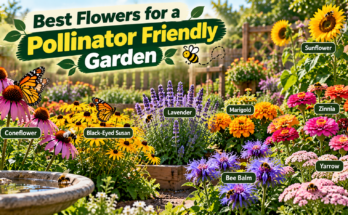
Supporting pollinators at home does not require a large garden or expensive equipment. Even a small backyard, patio, balcony, or collection of containers can provide useful resources for bees, butterflies, and other pollinating insects.
When I think about supporting pollinators, I focus on simple things that are easy to maintain. Flowers, water, shelter, and careful gardening can all make a difference.
Plant More Flowers
The easiest place to start is with flowers.
Pollinators visit flowers for nectar and pollen, so adding flowering plants creates an immediate food source.
Sunflowers, zinnias, cosmos, lavender, marigolds, and suitable local flowers can all be useful.
Even a few containers filled with flowers can help.
Choose Native Plants
Native plants are often a good choice for supporting local pollinators.
They are adapted to the local climate and may provide resources that native insects already recognize and use.
Before buying plants, I recommend checking which flowering plants grow naturally and reliably in your area.
Provide Flowers for Longer
Try to choose plants that bloom during different parts of the year.
If all your flowers bloom for only a short period, pollinators may have fewer resources afterward.
A mixture of early, middle, and late blooming plants can provide a more continuous food supply.
Avoid Unnecessary Pesticides
One of the simplest ways to support pollinators is to avoid unnecessary pesticide applications.
Before using a pest control product, identify the pest and determine whether treatment is really needed.
Some insects may look suspicious but actually be harmless or beneficial.
Careful observation can prevent unnecessary damage to useful insects.
Create a Small Water Station
Pollinators need water too.
A shallow container filled with clean water can provide a simple drinking area.
Add stones or other safe surfaces so insects can land without falling into deep water.
Keep the water fresh and clean.
Provide Shelter
Pollinators need places to rest and protect themselves from weather.
Plants, shrubs, grasses, natural soil, and other garden features can provide shelter.
You can also leave a small section of the garden less disturbed.
Grow Flowers in Containers
People without a traditional garden can still support pollinators.
Containers can be placed on balconies, patios, rooftops, windowsills, or entrances where plants receive suitable sunlight.
A few flowering containers can create a small pollinator friendly space.
Plant Flowers Near Vegetables
If you grow vegetables, consider planting flowers nearby.
Flowers can attract bees and other pollinators that may also visit flowering vegetable plants.
This can make a vegetable garden more productive while also making it more attractive.
Let Some Plants Flower
Sometimes gardeners remove flowers from plants because they want to control the appearance of the garden.
However, flowers can provide valuable resources for pollinators.
Allowing suitable plants to flower can make the garden more useful to insects.
Support Caterpillars Too
If you want butterflies in your garden, remember that butterflies begin life as caterpillars.
Caterpillars need suitable host plants for food.
Some leaf damage may therefore be part of supporting the butterfly life cycle.
The goal is balance rather than eliminating every caterpillar.
Keep the Garden Diverse
A diverse garden can support a wider variety of insects.
Try combining flowers, vegetables, herbs, shrubs, and other suitable plants.
Different plants provide different types of food and shelter.
This can make your home garden more ecologically useful.
Observe Before You Act
One of my favorite gardening habits is simply observing.
Before removing an insect or treating a plant, take a moment to identify what you are seeing.
You may discover that the insect is a pollinator or predator rather than a pest.
This small habit can help you make better gardening decisions.

Final Thoughts
Supporting pollinators at home can be surprisingly simple. Plant flowers, choose suitable native plants, provide water and shelter, avoid unnecessary pesticides, and allow your garden to have some natural diversity.
You do not need a huge property to make a difference. A small garden or even a few flowering containers can provide food and habitat for visiting insects.
From my point of view, supporting pollinators is one of the easiest ways to make home gardening more connected to nature. When bees and butterflies start visiting your flowers, you can see the results of those small efforts directly.