Companion planting is one of the gardening methods I find most interesting because it encourages us to think about the vegetable garden as a complete growing system rather than a collection of individual plants. Instead of planting every vegetable separately, companion planting involves growing certain plants close together so they can share space in a practical way.
When I plan a vegetable garden, I like to consider how plants grow, how much space they need, how much sunlight they receive, and what kind of care they require. Companion planting can help make better use of available garden space while also creating a more diverse and balanced garden.
There are many claims about companion planting, but I believe it is important to approach the subject realistically. Planting two vegetables together does not automatically solve every gardening problem. Healthy soil, proper watering, sufficient sunlight, good spacing, and regular observation are still essential.
What Is Companion Planting?
Companion planting means growing different types of plants near each other based on their growing characteristics and potential benefits.
For example, a tall plant may provide some shade for a shorter crop that prefers protection from strong afternoon sunlight. A fast growing vegetable can be harvested before a slower growing plant reaches its full size. Some herbs and flowers can also attract beneficial insects that visit the garden.
The main idea is to plan plants according to how they use the available space and resources.
In my opinion, this makes companion planting particularly useful for small vegetable gardens. When space is limited, using the same area for different crops can increase variety without requiring a much larger garden.
How Companion Planting Works
Companion planting can work in several different ways. The simplest is through efficient use of garden space.
Tall crops such as tomatoes can grow upward with proper support, while smaller vegetables can occupy some of the surrounding ground space. Root vegetables grow below the soil, while leafy vegetables use space above the surface.
This creates different layers in the garden.
Another part of companion planting involves timing. Some vegetables grow quickly and can be harvested before slower growing crops become large. This means the same garden area can produce more than one crop during a growing season.
Companion planting can also encourage biodiversity. A garden containing different vegetables, herbs, and flowers provides a wider range of habitats and food sources for insects.
Companion Planting and Garden Space
One of the biggest advantages of companion planting is better use of available space.
A traditional garden might give each crop its own large section. While this can make planning easier, it may not always be the best option for a small backyard garden.
With companion planting, I can combine plants with different growth patterns.
For example, a tall tomato plant can be grown near lettuce or another smaller crop. The tomato grows vertically, while the smaller vegetable remains close to the ground.
However, spacing still matters. Companion planting should never mean putting plants so close together that they compete for water, nutrients, and sunlight.
Companion Planting and Sunlight
Sunlight is one of the most important factors when planning vegetable combinations.
Most vegetables need adequate light, but not every plant has exactly the same requirements. Tall plants can eventually cast shadows over shorter plants, especially when the sun is lower in the sky.
When I design a garden, I think about the mature height of each plant instead of looking only at its size when it is first planted.
A tall crop should not block sunlight from a vegetable that needs full sun. On the other hand, some leafy vegetables can appreciate protection from intense heat in suitable conditions.
Understanding the movement of sunlight through the garden can therefore make companion planting much more successful.
Companion Planting and Soil Use
Different vegetables use soil in different ways.
Root vegetables develop underground, while leafy crops primarily produce foliage above the soil. Fruiting vegetables such as tomatoes and peppers can become large and require considerable nutrients.
Combining plants with different growth patterns can help gardeners organize their space more effectively.
However, all plants still need access to nutrients. Companion planting does not eliminate the need to maintain fertile soil.
Adding suitable organic matter, using good quality soil, and maintaining appropriate moisture are important parts of vegetable gardening.
I always think of companion planting as a way to organize plants rather than a replacement for good soil management.
Popular Companion Planting Examples
There are many traditional companion planting combinations used by home gardeners.
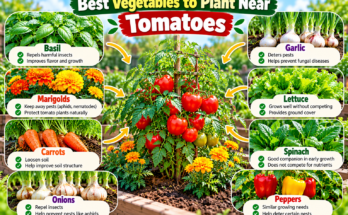
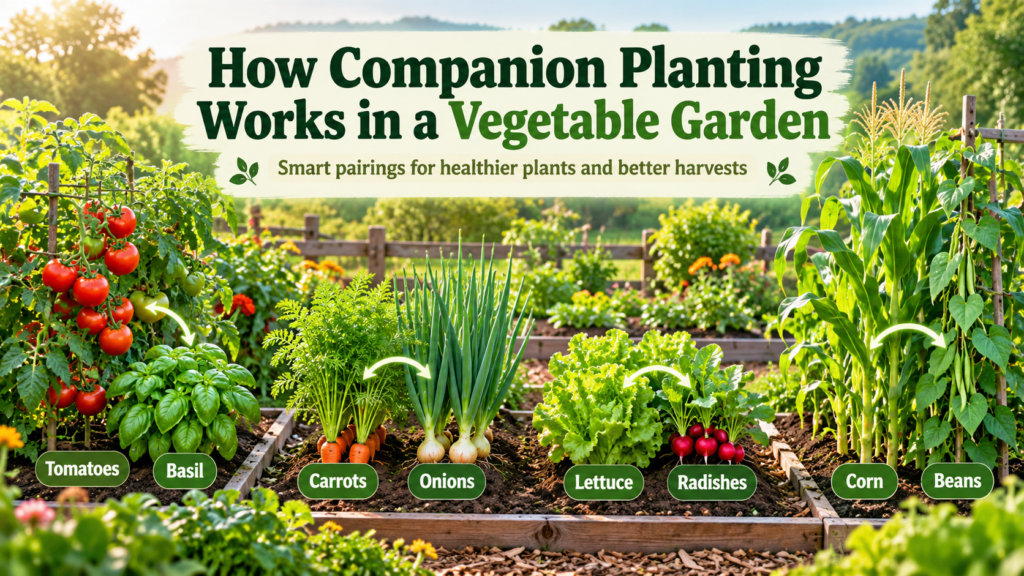
Tomatoes and basil are one of the most familiar combinations. They also make sense from a kitchen perspective because both are commonly used together in cooking.
Carrots and onions are another combination often found in vegetable gardens. Their different growth patterns allow them to occupy space differently.
Lettuce can be planted near taller vegetables when there is still sufficient light available. Radishes can also be useful because they mature relatively quickly and can be harvested before larger plants occupy more space.
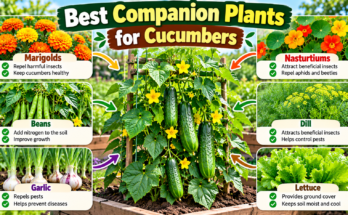
Beans can work well with some crops because they have different growth habits, although climbing varieties require careful planning because they need support.
The important thing is to treat these combinations as gardening possibilities rather than guarantees.
Companion Planting and Beneficial Insects
A diverse vegetable garden can provide a more interesting environment for insects.
Some flowering plants and herbs can attract pollinators and other beneficial insects. These insects may visit flowers throughout the garden and contribute to a healthier garden ecosystem.
For this reason, I like the idea of including flowering plants around vegetable beds when appropriate.
A garden does not have to contain vegetables alone. Adding suitable flowers can make the space more attractive while supporting insect diversity.
It is still important to identify insects correctly. Not every insect is harmful, and some insects can be useful visitors.
Can Companion Plants Prevent Pests?
This is an area where I think gardeners should have realistic expectations.
You will often hear that certain plants can completely repel pests when planted beside vegetables. In reality, pest management is more complicated.
Some plants may influence insect activity because of their scent or because they attract beneficial insects, but companion planting should not be treated as a guaranteed pest control method.
I prefer using companion planting as one part of a larger garden care strategy.
Regularly inspect leaves, stems, and the soil around plants. Remove heavily damaged leaves when appropriate, maintain good spacing, and address pest problems early.
Healthy plants are generally better able to handle normal garden challenges.
Companion Planting and Disease Management
Good plant spacing is particularly important when growing several crops together.
Overcrowding can reduce airflow and create conditions that are favorable to some plant diseases. Wet foliage that remains damp for long periods can also become a concern.
For this reason, companion planting should always include enough space between mature plants.
I like to leave pathways and gaps that allow me to inspect plants easily. This makes it much easier to notice yellowing leaves, unusual spots, insect activity, or other changes.
A well organized garden is not only easier to harvest but also easier to monitor.
Avoid Overcrowding the Garden
One mistake beginners can make with companion planting is trying to combine too many vegetables in one bed.
More plants do not always mean more vegetables.
If plants are overcrowded, they may compete for sunlight, water, nutrients, and root space. Harvesting can also become difficult because plants grow into each other.
When I plan a mixed vegetable bed, I consider the final size of every crop.
A small seedling may require very little room initially, but it can become a large plant later. Planning according to mature size is one of the simplest ways to avoid overcrowding.
Companion Planting for Small Gardens
Companion planting can be especially helpful for small vegetable gardens.
If you have only a limited backyard, raised bed, patio, or container area, combining suitable crops can give you more variety from the same amount of space.
For example, a small garden could include tomatoes, lettuce, onions, carrots, herbs, and peppers in carefully planned sections.
Vertical growing can also make a major difference. Crops that naturally climb can be trained onto suitable supports, leaving more ground space for shorter vegetables.
This approach allows gardeners to think vertically as well as horizontally.
Plan Companion Plants According to Seasons
Seasonal planning is another important part of successful companion planting.
Not all vegetables grow well at the same time. Some prefer cool weather, while others need warmer conditions.
I recommend creating a simple planting schedule based on the local growing season. A vegetable that works well beside tomatoes during warm weather may not be suitable during a cooler season.
You can also use succession planting. A quick growing crop can be harvested and replaced with another vegetable later.
This keeps the garden productive and reduces the amount of unused space.
Keep Notes About What Works
Every garden has different conditions, so I believe keeping notes is extremely useful.
Write down which vegetables were planted together, how well they grew, and whether any problems occurred.
You can also record planting dates, harvest results, watering routines, and pest observations.
After a few growing seasons, these notes can become a personal companion planting guide based on your own garden.
This is more valuable than simply following a generic planting chart because your soil, climate, sunlight, and growing conditions are unique.
Final Thoughts
Companion planting in a vegetable garden is mainly about thoughtful planning. It encourages gardeners to consider how plants interact with available space, sunlight, soil, water, and the surrounding garden environment.
Some combinations can make efficient use of space, while others may provide useful shade, attract beneficial insects, or allow different crops to grow in the same area at different times.
However, companion planting is not a substitute for basic vegetable garden care. Plants still need suitable soil, adequate sunlight, proper watering, enough space, and regular attention.
For me, the biggest benefit of companion planting is that it makes the garden feel more organized and diverse. Instead of treating every vegetable as an isolated crop, I can design the garden as a connected growing space.
With careful observation and a little experimentation, companion planting can help you make better use of your garden while growing a wider variety of fresh vegetables. The best approach is to start with a few simple combinations, observe the results, and gradually develop a planting system that works well for your own garden.