Growing peppers in a home vegetable garden can be very rewarding. I enjoy growing pepper plants because they do not need an enormous amount of space, and with proper care they can continue producing peppers for a long period. However, one thing I have learned is that where you plant peppers can matter almost as much as how you care for them.
This is where companion planting becomes useful. Choosing the right plants to grow near pepper plants can help you make better use of garden space, attract beneficial insects, and create a more diverse vegetable garden. While companion planting is not a magic solution for every gardening problem, I find it to be a practical way to organize a home garden.
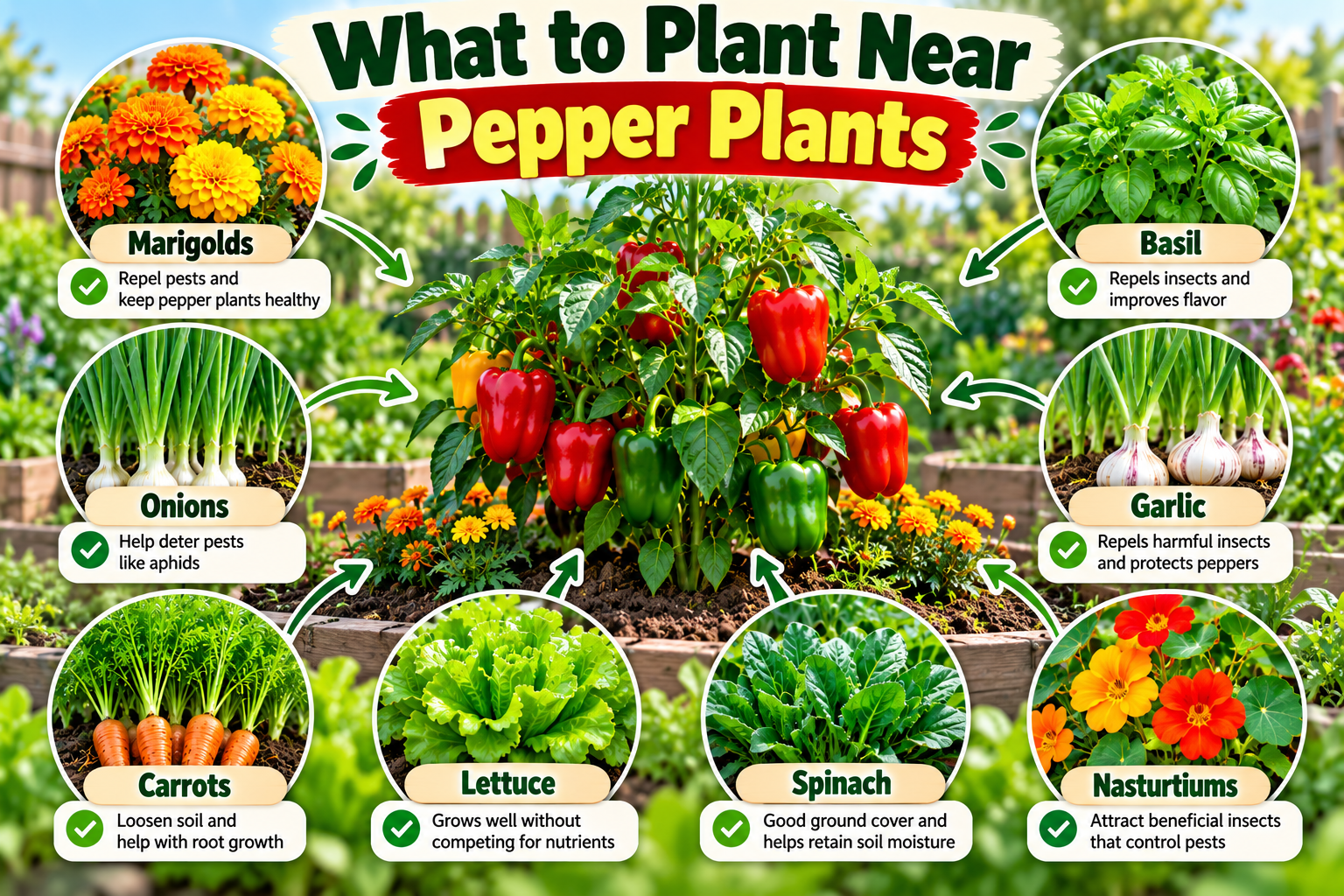
If you are wondering what to plant near pepper plants, there are several vegetables, herbs, and flowers worth considering. The best choices are plants that have compatible growing conditions and do not compete too aggressively with peppers for sunlight, water, or nutrients.
Why Companion Planting Matters for Peppers
Pepper plants generally prefer warm conditions, plenty of sunlight, fertile soil, and consistent moisture. When selecting neighboring plants, I try to choose crops that can grow comfortably under similar conditions.
Companion planting can also increase diversity in the garden. Instead of growing one crop in a large block, you can combine peppers with herbs, vegetables, and flowers.
A diverse garden can also provide habitat and food sources for beneficial insects. Some flowering plants attract pollinators and other helpful insects that contribute to a healthier garden environment.
However, I would not rely on companion planting alone to prevent pests or diseases. Good soil, proper watering, adequate spacing, and regular plant inspection are still essential.
Basil Near Pepper Plants
Basil is one of my favorite plants to grow near peppers. Both plants enjoy warm weather and plenty of sunlight, making them suitable companions in many home gardens.
Basil also makes good use of garden space because it generally stays smaller than pepper plants. You can grow basil around the edges of a pepper bed without taking too much room away from the peppers.
Another advantage is that you can harvest both plants regularly throughout the growing season. Fresh basil and homegrown peppers can also be used together in many recipes.
When planting basil near peppers, make sure neither plant becomes overcrowded. Good airflow is important for maintaining healthy foliage.
Onions Near Pepper Plants
Onions can also work well near pepper plants. They grow differently from peppers and generally do not take up the same amount of above ground space.
Because onions have narrow leaves, they can be useful for filling spaces between larger vegetable plants. This makes them an interesting option for gardeners who want to maximize limited garden space.
I like the idea of combining plants with different growth habits because it allows the garden to produce more without making every section look crowded.
Just remember that onions still need adequate sunlight and suitable soil conditions. Avoid planting them so close to peppers that either crop struggles for space.
Carrots Near Peppers
Carrots are another vegetable that can be grown near peppers when the garden has suitable soil.
Carrots develop their roots below the soil surface, while pepper plants develop their main root system differently. Because they occupy space in different ways, they can sometimes be combined effectively.
The biggest consideration is soil preparation. Carrots prefer loose soil that allows their roots to develop properly. If your garden soil is compacted or filled with large stones, carrots may not grow well regardless of where they are planted.
Preparing the soil properly before planting can benefit both crops.
Lettuce Near Pepper Plants
Lettuce can be useful around pepper plants because it is relatively compact and can be harvested before pepper plants reach their full size.
This is especially helpful in a small vegetable garden. You can plant lettuce in available spaces while young pepper plants are still developing.
As the season becomes warmer, lettuce may struggle with excessive heat. In that situation, the growing conditions may become more suitable for peppers than lettuce.
For this reason, I think lettuce works best as a seasonal companion rather than a permanent neighbor throughout the entire growing season.
Spinach Near Pepper Plants
Spinach can also be considered when planning what to plant near pepper plants. Like lettuce, spinach can make efficient use of smaller areas.
The main consideration is temperature. Spinach generally performs better during cooler growing conditions, while peppers prefer warmth.
This means they may not always have the exact same growing schedule. Still, in a garden where seasons overlap, spinach can be planted near peppers during an appropriate part of the growing season.
I recommend paying attention to local weather rather than following a planting schedule blindly.
Marigolds Near Pepper Plants
Marigolds are popular in vegetable gardens and can be planted around pepper plants. Their flowers add color while also increasing plant diversity.
One reason gardeners like marigolds is that their flowers can attract beneficial insects and pollinators. They can also help create a more visually appealing garden.
I especially like using flowers around the edges of vegetable beds. This keeps the main growing area productive while adding some beauty to the garden.
However, marigolds should still receive enough sunlight and space. Planting too many flowers in a small area can create unnecessary competition.
Nasturtiums Near Peppers
Nasturtiums can also be useful in a mixed vegetable garden. They produce attractive flowers and can add another layer of diversity around pepper plants.
Depending on the variety, nasturtiums can spread or trail, so I recommend giving them enough room. If they are allowed to grow directly over pepper plants, they may interfere with airflow and sunlight.
I prefer to place spreading plants where they can grow without covering smaller vegetables.
Cucumbers Near Pepper Plants
Cucumbers and peppers can sometimes share a garden, but spacing is especially important.
Cucumber plants can become large and spread quickly. If they are grown too close to peppers, their leaves and vines may compete for sunlight and space.
If you want to grow both crops together, I recommend using a trellis for cucumbers. Growing cucumbers vertically can save valuable ground space and reduce the chance that vines will cover pepper plants.
This is particularly helpful in small gardens where every available area needs to be used carefully.
Beans Near Pepper Plants
Beans can be another option, particularly bush varieties that do not spread excessively.
Beans and peppers have different growth habits, which can make them suitable for mixed planting when enough space is available.
However, I would avoid creating an overcrowded planting arrangement. The goal of companion planting is to use space efficiently, not to fit as many plants as possible into one bed.
If you choose climbing beans, provide proper support and make sure they do not shade the pepper plants.
Parsley Near Pepper Plants
Parsley is a useful herb to consider around peppers. It is relatively compact and can fit into smaller spaces.
Growing herbs around vegetable plants is one of my favorite ways to make a home garden more productive. Herbs can provide fresh ingredients while also adding variety to the garden.
Parsley can be harvested regularly without requiring a large planting area. Just make sure it receives suitable light and does not become crowded by larger plants.
Plants I Would Avoid Planting Too Close
Knowing what not to plant near peppers can be just as useful as knowing what to plant.
I generally avoid placing large, aggressive plants directly beside peppers. Plants that spread heavily can compete for sunlight, water, and nutrients.
I would also avoid creating a situation where tall plants completely shade peppers. Pepper plants need plenty of sunlight, so excessive shade can reduce their performance.
Very dense planting can also reduce airflow. Poor airflow may create a more favorable environment for certain plant diseases, especially when foliage stays wet for long periods.
The key is not necessarily avoiding every particular plant. Instead, think about size, spacing, sunlight, water requirements, and growth habits.
Give Pepper Plants Enough Space
Even the best companion plants will not help if pepper plants are overcrowded.
When planting peppers, follow the spacing recommendations for the particular variety you are growing. Some pepper plants remain compact, while others become quite large.
I prefer to leave enough space to walk around the plants and inspect the leaves. This makes it much easier to identify pest problems early.
Good spacing also makes harvesting more convenient. There is nothing more frustrating than having healthy peppers growing in a location that is difficult to reach.
Consider Soil and Water Requirements
Companion plants should have reasonably compatible needs. If one plant requires very dry soil while another needs consistently moist soil, growing them directly together may create challenges.
Peppers generally perform best when they receive consistent moisture without remaining in waterlogged soil.
Before adding companion plants, consider how much water they require and whether their roots will compete with the peppers.
Adding organic matter such as well prepared compost can help improve soil structure and support healthy plant growth.
Use Flowers to Increase Garden Diversity
One of the simplest ways to improve a pepper garden is to include flowering plants.
Flowers can make a vegetable garden more attractive while providing resources for pollinators and beneficial insects.
Marigolds and nasturtiums are popular choices, but there are many other suitable flowers depending on your climate and available space.
I like placing flowers around the borders of vegetable beds rather than filling the main planting area with them. This provides visual interest without taking too much space away from food crops.
My Simple Pepper Companion Planting Approach
If I were planning a small home garden specifically around peppers, I would keep the arrangement simple.
I would place pepper plants in a sunny location with good spacing. I would consider basil or parsley nearby and use onions or carrots to make use of available ground space.
Around the edges, I might add marigolds or nasturtiums for flowers and additional garden diversity.
I would keep larger spreading plants away from the peppers unless they could be trained vertically. This approach keeps the garden organized without making companion planting unnecessarily complicated.
Final Thoughts
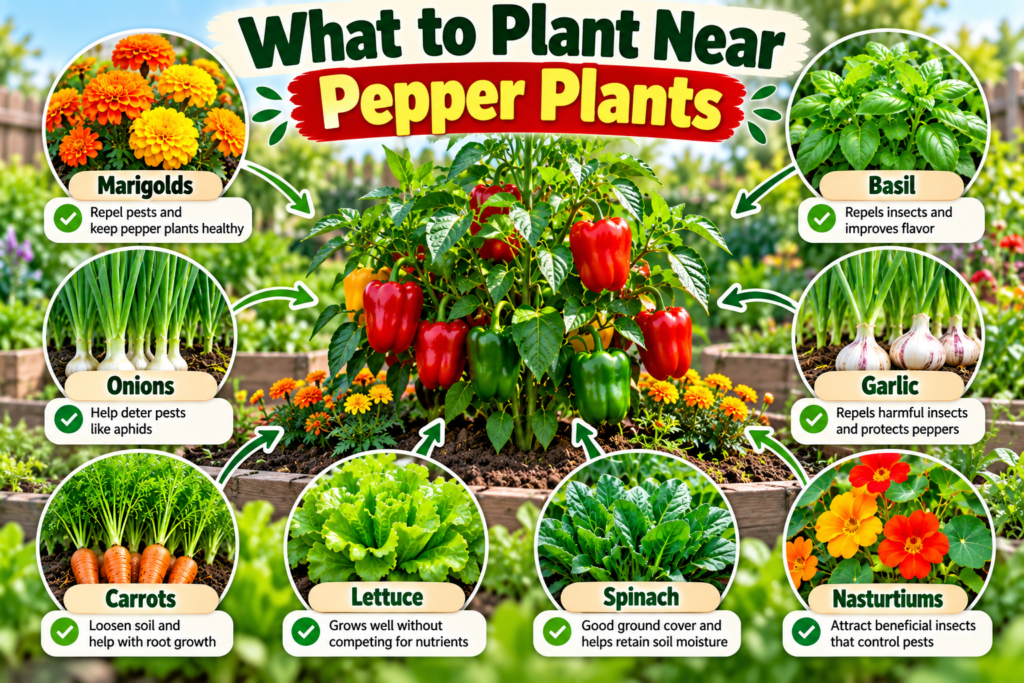
Knowing what to plant near pepper plants can help you create a more organized and productive home vegetable garden. Basil, onions, carrots, lettuce, spinach, parsley, marigolds, nasturtiums, and carefully managed beans or cucumbers can all be considered depending on your garden conditions.
The most important thing is to look at the complete growing environment. Sunlight, soil quality, water, spacing, plant size, and airflow all matter.
In my experience, the best companion planting strategy is a simple one. Choose plants with compatible needs, give every crop enough space, and avoid overcrowding. You do not need a complicated garden design to grow healthy peppers.
With thoughtful planning, pepper plants can become part of a diverse home garden where vegetables, herbs, and flowers grow together naturally. This not only makes better use of garden space but can also make gardening more enjoyable throughout the growing season.