Growing cucumbers in a home vegetable garden can be very rewarding. Cucumber plants grow quickly, produce plenty of fresh vegetables, and can make good use of vertical garden space. However, like other vegetables, cucumbers can benefit from being grown alongside the right plants. This is where companion planting becomes useful.
In my experience, choosing the best companion plants for cucumbers is not just about making the garden look attractive. Good companion plants can help you use garden space more efficiently, attract beneficial insects, support pollination, and create a healthier growing environment. Some plants can also provide ground cover or help make the garden more diverse.
Companion planting does not guarantee that every cucumber plant will grow perfectly, but it can be a useful part of an overall vegetable garden plan. The key is choosing plants that have compatible growing requirements and giving every plant enough space, sunlight, water, and nutrients.
What Is Companion Planting?
Companion planting means growing different plants close to each other because they may provide useful benefits when grown together. Some plants attract pollinators, while others attract beneficial insects that feed on common garden pests.
For cucumbers, companion planting can be especially helpful because cucumber plants need pollinators for good fruit production. Their flowers attract bees and other insects, so having flowering plants nearby can make the garden more welcoming to pollinators.
I also like companion planting because it allows me to grow several useful plants in the same garden area instead of depending on a single crop.
Best Companion Plants for Cucumbers
There are many plants that can work well around cucumbers. However, some choices are especially practical for a home vegetable garden.
1. Dill
Dill is one of my favorite herbs to grow near cucumbers. It takes relatively little space and produces flowers that can attract beneficial insects.
Dill can also make a useful addition to a vegetable garden because it is easy to harvest for cooking. When allowed to flower, it can provide a source of food for certain beneficial insects.
I prefer placing dill around the edges of cucumber growing areas so that it does not compete heavily with the cucumber vines for space.
2. Nasturtiums
Nasturtiums can be a beautiful companion plant for cucumbers. Their colorful flowers can attract pollinators and add visual interest to the vegetable garden.
They can also be useful as part of a broader pest management strategy because flowering plants can attract insects that contribute to a more diverse garden ecosystem.
Nasturtiums can spread, so I recommend giving them enough room. They are particularly useful when you want a garden that combines vegetables with attractive edible flowers.
3. Marigolds
Marigolds are commonly used in home vegetable gardens, and I find them useful around cucumber plants as well.
Their flowers attract pollinators and beneficial insects, while their strong scent can make the garden more diverse. Although marigolds should not be considered a guaranteed pest control solution, they can be part of a balanced garden environment.
I usually place marigolds along the edges of a cucumber bed rather than directly among crowded cucumber vines.
4. Beans
Beans can be useful companions for cucumbers because both crops enjoy warm growing conditions. Bush beans can fit into areas where there is limited vertical competition.
If you grow climbing beans, however, you should plan the garden carefully. Cucumbers and climbing beans can both use vertical space, so they may compete if their supports are too close together.
Good spacing and separate supports can make a big difference.
5. Peas
Peas can work well with cucumbers when their growing seasons overlap appropriately. Peas generally prefer cooler conditions, while cucumbers perform better in warm weather.
This means they are not always planted together for the entire season. Instead, peas can occupy garden space during cooler periods before cucumbers become the main crop.
This is an example of how companion planting can also involve timing rather than simply placing two plants next to each other.
6. Radishes
Radishes are another useful crop to consider near cucumbers. They grow quickly and do not usually require a large amount of space.
I like growing fast crops such as radishes around larger vegetables because they can provide an early harvest while the cucumber plants are still developing.
Once the cucumber vines begin taking up more room, the radishes may already be ready for harvesting.
7. Lettuce
Lettuce can be a practical companion crop when grown in suitable conditions. It is relatively compact and can make efficient use of space around larger cucumber plants.
One important consideration is sunlight. Cucumbers can eventually create considerable shade, so lettuce may benefit from partial shade during hotter weather.
However, make sure the area still has enough light and good airflow to keep the plants healthy.
8. Carrots
Carrots can also be grown near cucumbers when garden space is available. They grow underground while cucumber vines occupy more space above the soil.
This difference in growth habit can help you use the same garden area efficiently.
The main thing I focus on is soil preparation. Carrots prefer loose soil so their roots can develop properly, while cucumbers also need fertile soil and consistent moisture.
9. Sunflowers
Sunflowers can be useful in a cucumber garden because their flowers attract pollinators. However, they are large plants and can cast considerable shade.
For this reason, I would not place sunflowers directly in front of cucumbers where they block essential sunlight.
Instead, consider positioning them on the side or at the back of the garden. This can provide flowers for pollinators without unnecessarily shading the cucumber plants.
Herbs That Can Grow Near Cucumbers
Several herbs can be useful additions to a cucumber garden. Dill is one of the most practical choices, but other herbs may also fit depending on your garden space.
Basil can attract pollinators when flowering and is useful in the kitchen. Oregano and thyme can also provide flowers that support beneficial insects when allowed to bloom.
The important point is not to overcrowd the cucumber bed. Herbs should complement the vegetable garden rather than compete with cucumber vines for every available resource.
Why Flowers Are Helpful Near Cucumbers
One of the main reasons I like flowering companion plants is pollination.
Cucumbers produce separate male and female flowers, and pollinating insects help transfer pollen so fruit can develop properly. If pollinator activity is low, cucumber plants may produce flowers without producing as many cucumbers as expected.
Adding suitable flowering plants can make the garden more attractive to bees and other pollinators.
This is not a replacement for proper cucumber care, but it can support a healthier garden ecosystem.
Companion Plants Can Help Use Space Better
Cucumbers are often grown vertically using trellises. This is one of the best ways to save garden space.
When cucumber vines grow upward, you may be able to use some of the ground space underneath or nearby for smaller crops.
Radishes, lettuce, carrots, and some herbs can be useful choices depending on the available sunlight and moisture.
This approach is particularly helpful for small vegetable gardens where every section of soil matters.
Plants I Would Avoid Overcrowding With Cucumbers
Companion planting does not mean putting every plant close together. Some combinations can create unnecessary competition for sunlight, water, nutrients, or space.
Large plants should be positioned carefully so they do not shade cucumbers excessively. Other vigorous vines should also be given enough room to prevent the garden from becoming overcrowded.
I also avoid planting too many crops in a small area simply because they are considered good companions. Proper spacing is often more important than having a long list of companion plants.
Give Cucumbers Enough Space
Even the best companion plants will not help if cucumber plants are overcrowded.
Cucumber vines can spread quickly, especially when grown along the ground. If you use a trellis, the vines can grow upward and make the garden much easier to manage.
Good airflow is also important. Crowded foliage can create a damp environment where certain plant diseases may become more likely.
When planning your cucumber garden, think about the mature size of every plant rather than its size when you first plant it.
Watering and Soil Still Matter
Companion planting is only one part of successful cucumber growing. Cucumbers also need suitable soil, adequate sunlight, consistent moisture, and regular monitoring.
I prefer keeping the soil evenly moist without leaving it constantly waterlogged. Mulching around the plants can help reduce moisture loss during hot weather.
Adding suitable organic matter to the soil can also improve growing conditions. Before planting, I like to prepare the garden bed rather than trying to correct soil problems after the plants are already struggling.
Watch for Common Cucumber Pests
Even with companion plants, cucumber plants should be checked regularly for pests. Look underneath leaves and around new growth because some insects can be difficult to notice at first.
Early detection makes problems easier to manage. Remove heavily damaged leaves when appropriate and use gardening practices that encourage beneficial insects.
Companion planting should be viewed as one part of integrated garden care rather than a guaranteed way to eliminate pests.
Final Thoughts
The best companion plants for cucumbers are those that fit naturally into your garden and provide useful benefits without creating unnecessary competition.
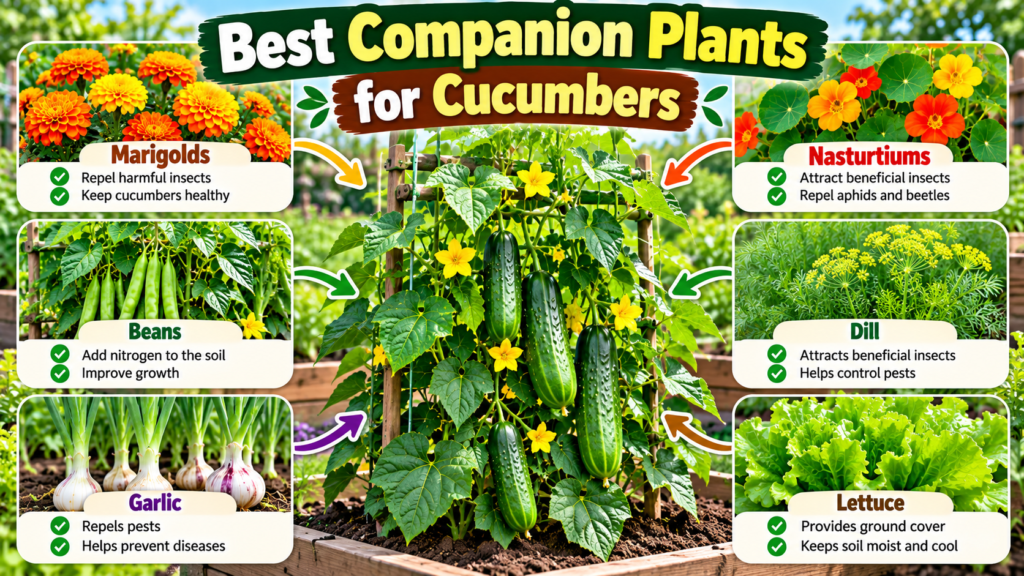
Dill, nasturtiums, marigolds, beans, peas, radishes, lettuce, carrots, and sunflowers can all have a place in a well planned cucumber garden. The right choices will depend on your available space, climate, planting season, and the way you grow your cucumbers.
Personally, I think the biggest advantage of companion planting is that it encourages me to look at the garden as a complete ecosystem rather than a collection of individual plants. Instead of simply planting cucumbers and hoping for a good harvest, I can create a garden that provides flowers for pollinators, space for useful herbs, and room for several different vegetables.
Start with a few companion plants and observe how they perform in your own garden. Keep notes about what grows well, what attracts pollinators, and which combinations make garden maintenance easier. Over time, you can develop your own companion planting strategy based on your experience.
With good spacing, healthy soil, proper watering, sufficient sunlight, and a little planning, companion planting can make a cucumber garden more productive, attractive, and enjoyable throughout the growing season.