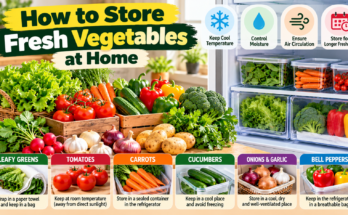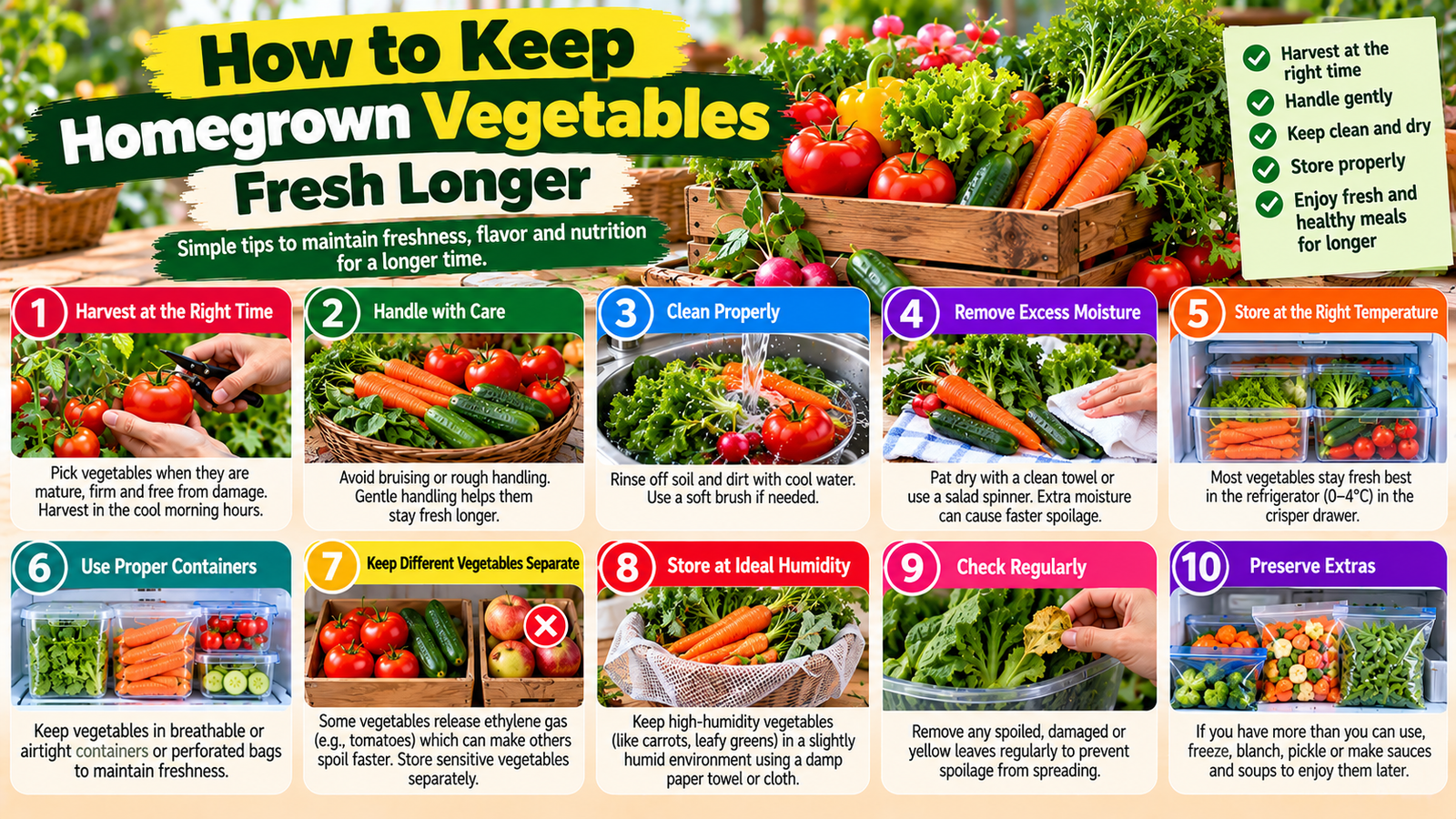
One of the best parts of growing vegetables at home is being able to harvest fresh produce when I need it. Garden vegetables often have excellent flavor and freshness, but a successful harvest can sometimes create a new challenge. I need to know how to keep everything fresh long enough to enjoy it.
Learning how to keep homegrown vegetables fresh longer can reduce food waste and help me get more value from my garden. The process is mostly about harvesting at the right time, handling vegetables carefully, and providing suitable storage conditions.
Harvest Carefully
The way vegetables are harvested can affect how well they store.
I try to harvest vegetables carefully and avoid unnecessary cuts, bruises, and scratches.
When possible, I harvest during cooler parts of the day and move the produce to a suitable place soon afterward.
Freshly harvested vegetables should not be left sitting in strong sunlight for long periods.
Do Not Harvest More Than You Need
One of the simplest ways to keep vegetables fresh is to harvest according to your needs.
If I know I only need a few cucumbers for dinner, there may be no reason to harvest an entire basket.
Regular harvesting also encourages me to pay attention to the garden and pick vegetables at the right stage.
Understand Each Vegetable
There is no single storage method that works for every vegetable.
Leafy greens generally need cool storage and careful moisture control. Carrots can benefit from cool conditions, while tomatoes have different requirements depending on their ripeness.
Learning a little about each vegetable can prevent common storage mistakes.
Keep Vegetables Cool
Many homegrown vegetables benefit from cool storage.
The refrigerator is useful for many types of produce, especially when the weather is warm.
However, I do not put every vegetable into the refrigerator automatically. Some vegetables can suffer from very cold temperatures, so I consider their specific storage needs.
Control Moisture
Moisture is one of the biggest factors affecting freshness.
Too much moisture can encourage mold and decay. Too little moisture can make vegetables wilt or become shriveled.
I try to keep vegetables reasonably dry while protecting them from excessive moisture loss.
Paper towels, suitable produce bags, and appropriate containers can help.
Store Vegetables Separately
I also try to avoid putting every vegetable into one large container.
Different vegetables have different storage requirements and can affect each other.
Separating vegetables by type makes it easier to control storage conditions and identify produce that needs to be used soon.
Protect Vegetables From Physical Damage
Vegetables that are crushed or bruised often spoil faster.
I avoid putting heavy items on top of delicate produce and make sure storage containers are not packed too tightly.
This is especially important for tomatoes, cucumbers, leafy greens, and other delicate vegetables.
Use Older Produce First
When I have a large garden harvest, I organize vegetables according to freshness.
The vegetables harvested earlier are used first, while newer produce can wait.
This simple habit prevents vegetables from being forgotten in the refrigerator or pantry.
Check the Harvest Regularly
I recommend checking stored vegetables every few days.
A quick inspection can reveal soft spots, mold, discoloration, or excess moisture.
Removing spoiled vegetables early helps protect the rest of the harvest.
Preserve Extra Produce
Sometimes a garden simply produces more vegetables than a family can eat fresh.
In this situation, preservation can extend the usefulness of the harvest.
Depending on the vegetable, freezing, drying, pickling, or other suitable preservation methods may be useful.
Proper food safety practices are important whenever vegetables are being preserved for long term storage.
Share Your Harvest
Sharing is another excellent way to keep vegetables from going to waste.
If I have more vegetables than I can use, I can give some to family, friends, neighbors, or others who appreciate fresh produce.
This is especially useful during periods when the garden is producing heavily.
Plan Future Plantings
If I repeatedly end up with more vegetables than I can use, I consider adjusting my planting plan.
Growing fewer plants or spacing out planting times can create a more manageable harvest.
Succession planting can also provide a steady supply instead of producing a huge amount all at once.

Final Thoughts
Keeping homegrown vegetables fresh longer starts before the vegetables even reach the kitchen.
Careful harvesting, gentle handling, proper storage, moisture control, regular checking, and thoughtful garden planning can all make a difference.
I believe the goal of a home vegetable garden is not simply to grow as much as possible. It is to grow useful food and enjoy it at its best.
With good storage habits, even a productive garden harvest can become easier to manage and much less wasteful.