When I grow beans in a vegetable garden, I always think about what I can plant nearby. Beans are productive vegetables that can grow in surprisingly small spaces, especially when climbing varieties are given proper support. However, the plants around them can also affect how well the garden space is used.
Choosing the best companion plants for beans is a simple way to create a more organized and productive vegetable garden. I do not look at companion planting as a strict set of rules. Instead, I consider sunlight, soil, water, plant size, and the growing habits of each crop before deciding what should grow next to my beans.
Some plants work particularly well with beans because they use space differently or have similar growing requirements. In this article, I will share the companion plants I would consider when planning a healthy bean garden and explain how I would arrange them.
Why Companion Planting Matters for Beans
Beans are useful garden plants because they come in both bush and climbing varieties. Bush beans remain relatively compact, while pole beans grow upward and can make excellent use of vertical space.
Because beans can add nitrogen to the soil through their relationship with certain soil bacteria, they can also be useful as part of a larger garden rotation. However, I would not assume that every plant growing beside beans will automatically benefit from this relationship.
For me, the biggest advantage of companion planting is efficient garden planning. I can combine plants with different heights, root patterns, and growing periods to make better use of the available space.
Corn
Corn is one of the traditional companion plants for beans. The combination is especially interesting when growing climbing beans.
Corn grows tall and upright, while pole beans naturally want to climb. In suitable conditions, bean vines can use sturdy corn plants as support.
I would only use this method when the corn is strong enough to handle the bean vines. Heavy bean growth can put pressure on young or weak corn plants.
Another advantage is that the two crops use space differently. Corn grows upward, while beans can climb around it.
If I use this combination, I make sure both crops receive enough sunlight and that the planting area is not overcrowded.
Peas
Peas and beans can be considered together because both are legumes and have similar general growing characteristics. However, I would not necessarily plant them directly on top of each other.
Instead, I prefer thinking of them as crops that can fit into different parts of a garden plan. Peas are generally more suited to cooler growing conditions, while beans usually perform better in warmer weather.
This makes them useful for seasonal planning. I can grow peas during a cooler period and then use the same garden space for beans when temperatures become suitable.
This approach helps me get more production from the same garden area throughout the year.
Cucumbers
Cucumbers can be a useful companion crop for beans when space is planned carefully. Both can grow vertically when provided with suitable support.
I would avoid placing two vigorous climbing plants on the same small trellis because they can quickly compete for space.
Instead, I like giving each crop its own support system. This keeps the plants organized and makes harvesting easier.
Cucumbers also have broad leaves that can cover the soil. Beans, particularly climbing varieties, can grow upward and make better use of vertical space.
Radishes
Radishes are one of my favorite vegetables to include around larger garden crops because they grow quickly and do not require much space.
They can be planted near beans without taking over the area. Since radishes develop underground while bean plants grow above the soil, the two crops can use different parts of the garden.
I still leave enough room for the bean roots and avoid planting radishes too densely.
The quick growing nature of radishes also makes them useful for filling small spaces early in the season.
Carrots
Carrots can also fit into a garden plan with beans. Carrots grow underground, while beans use space above the soil.
The main consideration is soil quality. Carrots need loose, well prepared soil so their roots can develop properly.
I would prepare the soil before planting both crops and make sure bean plants do not become so dense that they prevent adequate sunlight from reaching the carrot area.
This combination can be particularly useful in a raised bed where every section of soil needs to be used efficiently.
Lettuce
Lettuce can work well near beans because it stays relatively low compared with climbing bean varieties.
If I grow pole beans on a trellis, lettuce can occupy some of the space below or nearby. This creates a layered garden where taller plants use vertical space and shorter plants remain closer to the ground.
However, I always monitor the amount of shade created by the beans. Too much shade may affect lettuce growth depending on the season and growing conditions.
Proper spacing makes this combination much easier to manage.
Spinach
Spinach is another leafy vegetable that can be included in a garden with beans.
Like lettuce, spinach stays relatively low and can make use of space around taller crops. I especially like combinations that allow me to grow vegetables at different heights.
The important thing is to consider sunlight. If bean plants become very large, they can shade the surrounding area. I would place spinach where it can still receive appropriate light for healthy growth.
Marigolds
Although marigolds are flowers rather than vegetables, I often consider them when planning a vegetable garden.
They can add color and visual interest around bean plants. Their flowers can also attract pollinators and beneficial insects to the garden.
I do not treat marigolds as a magical pest control solution. Instead, I see them as one part of a diverse garden.
Planting a few flowers around vegetable beds can make the entire garden more attractive while supporting a wider variety of insects.
Nasturtiums
Nasturtiums are another flowering plant that can be included around beans.
They can spread across the ground and provide additional visual interest. If I have enough garden space, I can use them around the edges of bean beds rather than allowing them to compete directly with the main crops.
Nasturtiums are also edible, which gives them an additional benefit for a home garden.
The key is controlling their growth so they do not overwhelm young bean plants.
Beets
Beets can be useful in a mixed vegetable garden with beans because they remain relatively compact and develop their main edible portion underground.
This allows beans to use more vertical space while beets occupy lower areas.
I would still provide sufficient spacing and keep the bean plants supported properly.
When choosing companion crops, I prefer combinations where each plant has enough room to develop without competing excessively for light and water.
Potatoes
Potatoes can sometimes be included in a broader garden plan with beans, but I would be more careful with this combination.
Both crops require adequate soil space, and potatoes need room for their underground growth.
Instead of planting them too close together, I would keep separate sections with a clear pathway between them.
This allows me to manage each crop independently while still benefiting from an organized garden layout.
What I Avoid Planting Too Close to Beans
Knowing what not to plant beside beans can be just as useful as knowing the best companion plants.
I avoid overcrowding beans with other aggressive climbing plants. If several vines are competing for the same trellis, the garden can become difficult to manage.
I also avoid planting crops so close to beans that airflow is severely restricted.
Some gardening advice also recommends avoiding certain plant combinations, but I prefer to focus on practical issues rather than treating every traditional recommendation as an absolute rule.
The condition of the garden matters more than following a fixed chart.
Give Beans Enough Support
If I am growing pole beans, proper support is one of the most important things I prepare before planting.
A strong trellis, pole system, or other suitable structure allows the plants to climb naturally.
Supporting beans vertically also makes it easier to combine them with shorter crops such as lettuce, radishes, carrots, and beets.
I make sure the support is installed early so I do not disturb the roots later.
Think About Sunlight and Spacing
Even the best companion plants for beans will struggle if they are planted in an unsuitable location.
Beans generally need good sunlight for productive growth. I therefore check how much shade the surrounding plants will create.
I also consider mature plant size rather than the size of seedlings. A small bean plant may look harmless at planting time, but climbing varieties can eventually cover a large area.
Good spacing improves airflow and makes watering, harvesting, and inspection easier.
Final Thoughts
Choosing the best companion plants for beans does not have to be complicated. I focus on finding plants that can share garden space without creating unnecessary competition.
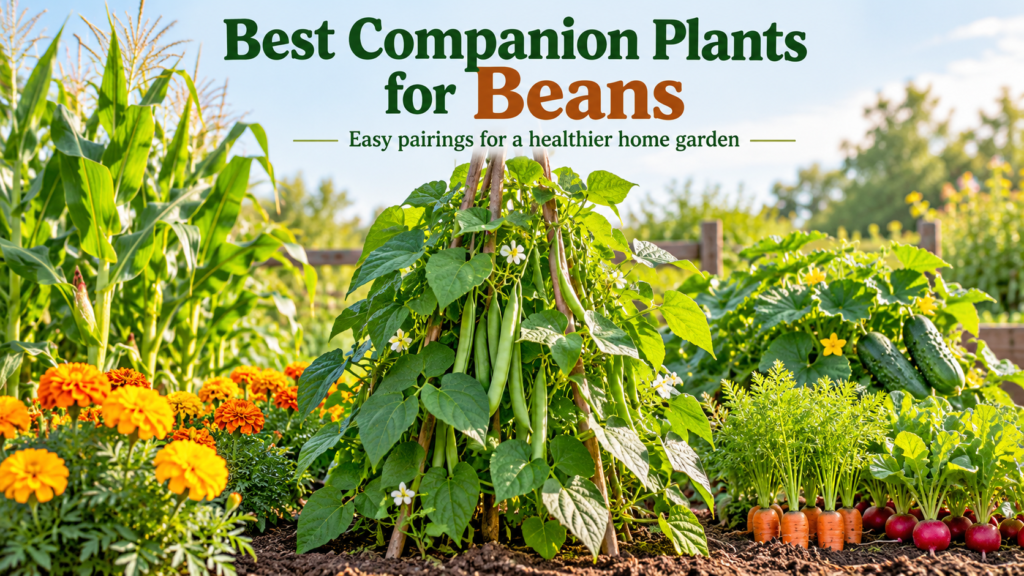
Corn, radishes, carrots, lettuce, spinach, cucumbers, beets, and suitable flowers such as marigolds and nasturtiums can all have a place in a well planned bean garden.
For climbing beans, I pay special attention to vertical space and support. For bush beans, I focus more on surrounding plants that remain compact.
My main goal with companion planting is always the same: create a garden that is easy to maintain, productive, and enjoyable to work in.
I believe the best companion planting strategy comes from observing your own garden. Soil, climate, sunlight, watering habits, and available space are different in every garden. Once you understand these conditions, choosing suitable plants for beans becomes much easier.
With thoughtful spacing and a simple garden plan, beans can become an excellent part of a mixed vegetable garden while allowing you to grow several other useful crops in the same space.