
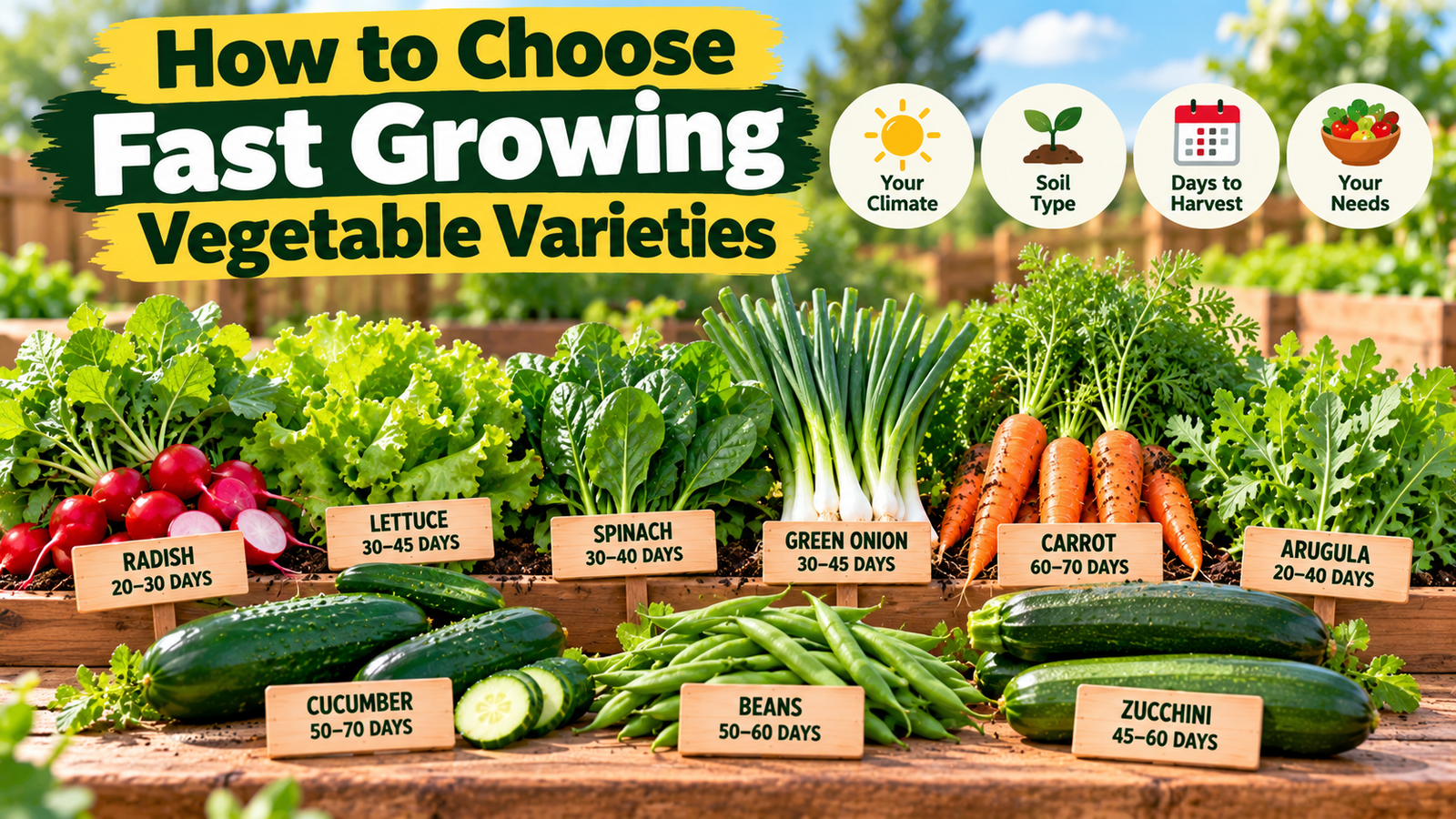
When I plan a vegetable garden, I always like the idea of harvesting fresh vegetables as soon as possible. Waiting for a crop to mature can be exciting, but sometimes I want vegetables that grow quickly and provide a harvest within a shorter period. This is where fast growing vegetable varieties can be useful.
Choosing fast growing vegetables is not simply about picking the variety with the smallest number of days listed on the seed packet. Growing conditions, climate, soil, watering, sunlight, and plant care can all affect how quickly a vegetable grows. The right variety can give you a useful head start, but good growing conditions are equally important.
What Are Fast Growing Vegetable Varieties?
Fast growing vegetable varieties are types that can reach harvestable size relatively quickly compared with slower varieties of the same crop.
For example, some lettuce varieties can be harvested as young leaves within a short period, while other crops may require much longer.
When I choose fast growing vegetables, I look at the expected days to maturity and also consider whether I can harvest the crop at the baby stage.
Check the Days to Maturity
The first thing I look at on a seed packet is the days to maturity.
This information gives you an estimate of how long the plant may take to produce a harvest under suitable conditions.
Keep in mind that this is not a guarantee. Weather, soil, water, sunlight, and planting conditions can change the actual harvest time.
Still, days to maturity is a useful starting point.
Consider Leafy Vegetables
Leafy vegetables are often excellent choices when you want a quick harvest.
Lettuce, arugula, mustard greens, spinach, and some other leafy crops can be harvested young.
One advantage is that you do not always have to wait for the plant to reach full maturity. Young leaves can often be used in salads and cooking.
Radishes Can Be Very Quick
Radishes are well known for their relatively quick growth.
They can be useful for gardeners who want to see results without waiting through a long growing season.
Different radish varieties have different maturity times, so checking the seed packet is still important.
Green Onions
Green onions can also be useful for gardeners looking for quick harvests.
Depending on the variety and growing method, they can be harvested for their leaves before the plant reaches full maturity.
They are useful in salads, soups, cooking, and many everyday meals.
Choose Varieties Suited to Your Season
A fast growing variety will not necessarily grow quickly if the weather is unsuitable.
For example, a cool season vegetable may struggle during very hot weather.
This is why I always consider the season before planting.
Choose a fast growing variety that is actually suited to the temperatures you expect during the growing period.
Provide Good Growing Conditions
Fast growing vegetable varieties still need proper care.
Healthy soil, adequate sunlight, consistent watering, and sufficient nutrients can help plants grow at their natural potential.
Poor soil or irregular watering can slow down even a quick variety.
Use Succession Planting
Succession planting is another useful way to increase harvests.
Instead of planting an entire crop at once, you can plant smaller amounts at regular intervals.
For quick growing vegetables, this can provide a more continuous supply.
I find this approach especially useful for lettuce, radishes, and other crops that can be harvested quickly.
Consider Baby Harvests
Some vegetables can be harvested when young.
Baby carrots, baby lettuce, young spinach, and small leafy greens can provide useful harvests before the plants reach full size.
This gives you more flexibility and can make the garden feel productive sooner.
Final Thoughts
Choosing fast growing vegetable varieties can help you enjoy fresh produce sooner, especially if you have a short growing season or limited patience for long crops.
Look at days to maturity, choose vegetables suitable for your climate, provide good growing conditions, and consider harvesting some crops young.
From my point of view, fast growing varieties are especially useful when combined with succession planting. Instead of waiting for one large harvest, you can create a steady supply of fresh vegetables throughout the season.


