
When choosing vegetable seeds, one of the details I always pay attention to is the expected maturity time. Some varieties produce a harvest relatively early, while others take longer but may offer different qualities or longer harvest periods.
Understanding early and late vegetable varieties can help you plan your garden more effectively. It can also help you choose crops according to your growing season and personal gardening goals.
What Are Early Vegetable Varieties?
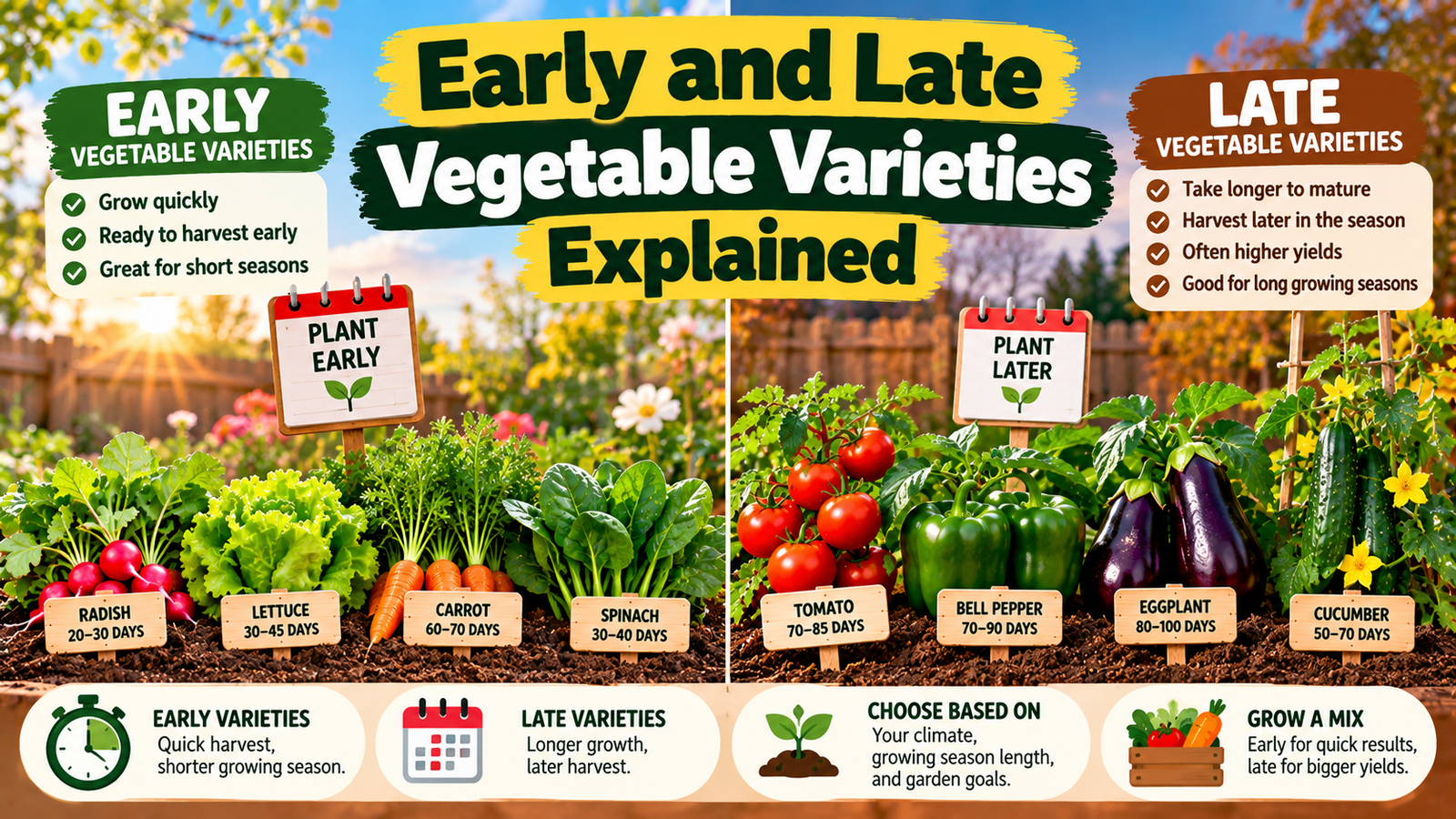
Early vegetable varieties are types that generally reach harvestable maturity sooner than later varieties of the same crop.
They can be particularly useful when you have a short growing season or simply want to harvest vegetables quickly.
For example, early varieties of certain radishes, lettuce, beans, and other vegetables can provide food sooner.
Benefits of Early Varieties
One major advantage of early varieties is that you do not have to wait as long for the harvest.
This can be useful for beginners because seeing quick results can make gardening more enjoyable.
Early crops can also be helpful when you want to fit multiple crops into one growing season.
What Are Late Vegetable Varieties?
Late varieties generally take longer to reach maturity.
This does not automatically mean they are better or worse.
Some gardeners choose late varieties because they may offer particular flavors, sizes, textures, or harvest characteristics.
The important thing is to make sure the variety fits your available growing season.
Why Growing Season Matters
If your growing season is short, a late variety may not have enough time to mature before unfavorable weather arrives.
In a longer growing season, you may have more flexibility.
This is why I always consider local weather conditions before choosing maturity times.
Early Tomatoes
Early tomato varieties can be useful when you want fresh tomatoes sooner.
They can also be valuable in areas where the suitable tomato growing season is relatively short.
However, fruit size and total harvest can vary between varieties, so do not choose based on maturity time alone.
Late Tomatoes
Some tomato varieties take longer to mature but may produce larger fruits or provide other qualities you prefer.
If your climate allows a long growing period, these varieties can be worth growing.
Early Leafy Vegetables
Many leafy vegetables can be harvested young, which makes them useful for early harvests.
Lettuce, spinach, arugula, and mustard greens can provide leaves relatively quickly under suitable conditions.
This makes them practical for gardeners who want to see results soon.
Late Crops Can Extend Harvests
A late variety can sometimes help extend the harvesting period.
By planting varieties with different maturity times, you may be able to avoid having everything ready at once.
This can be particularly useful for crops that produce more food than your family can use immediately.
Combine Early and Late Varieties
One strategy I like is growing both early and later varieties.
The early variety can provide the first harvest, while the later variety continues developing.
This approach can create a more extended harvest window.
Check Days to Maturity
Seed packets usually provide estimated maturity information.
Use this as a planning tool rather than an exact promise.
Weather and growing conditions can change the actual maturity time.
Final Thoughts
Early and late vegetable varieties each have useful advantages.
Early varieties can provide quicker harvests and may be useful in short growing seasons. Late varieties can offer different qualities and may help extend harvests when the climate allows.
From my point of view, you do not have to choose only one.
Growing a combination of early and late varieties can make the garden more interesting and help spread harvests throughout the season.


