

Leafy vegetables are some of the most practical crops for a home garden. They can often be harvested for salads, cooking, soups, sandwiches, and many everyday meals. I also like leafy vegetables because many varieties can be grown in relatively small spaces.
Choosing the best leafy vegetable varieties depends on your climate, available space, preferred flavor, and how you plan to use the harvest.
Spinach
Spinach is one of the most popular leafy vegetables for home gardens.
It is especially useful during cooler growing conditions and can be harvested as young leaves or allowed to mature.
Baby spinach works well in salads, while mature leaves can be cooked.
When growing spinach, I prefer choosing a variety suited to the local season because excessive heat can cause plants to bolt quickly.
Lettuce
Lettuce is another excellent choice for home gardens.
There are many types, including loose leaf, butterhead, romaine, and other varieties.
Loose leaf lettuce can be particularly convenient because individual leaves can be harvested as needed.
For small gardens, compact lettuce varieties can make excellent use of available space.
Kale
Kale is a hardy leafy vegetable that can provide a long harvest under suitable conditions.
There are several types with different leaf shapes, textures, and colors.
Kale can be used in salads, cooked dishes, soups, and smoothies.
It can also remain productive after repeated harvesting if the plant is managed properly.
Swiss Chard
Swiss chard is known for its colorful stems and large leaves.
It can add both food and visual interest to a vegetable garden.
Young leaves can be used in salads, while larger leaves can be cooked.
One reason I like Swiss chard is that it can continue producing leaves when harvested carefully.
Mustard Greens
Mustard greens are useful for gardeners who enjoy stronger flavors.
They can be eaten raw when young or cooked when mature.
Mustard greens can grow relatively quickly under suitable conditions, making them useful when you want a leafy crop that does not require a very long growing period.
Collard Greens
Collard greens are another leafy vegetable worth considering.
They produce large leaves and are commonly cooked.
They can be a useful option for gardeners who want substantial leafy harvests.
Arugula
Arugula is popular because of its distinctive peppery flavor.
It can be harvested as young leaves for salads or allowed to grow larger.
Arugula can also be useful for gardeners working with limited space because it does not require the same amount of room as some larger vegetables.
Choose Varieties for Your Climate
Climate is especially important for leafy vegetables.
Some varieties prefer cooler conditions, while others can tolerate warmer conditions better.
Before choosing seeds, check the recommended growing season.
This simple step can prevent many problems.
Consider Harvesting Style
Think about how you want to harvest your leafy vegetables.
Some varieties are ideal for harvesting young leaves. Others can provide mature leaves over a longer period.
If you want a continuous supply, consider planting small amounts at regular intervals instead of planting everything on the same day.
Grow Several Leafy Vegetables
I enjoy growing several leafy vegetables because they offer different flavors and textures.
For example, lettuce can provide mild salad leaves, spinach can be used for cooking, mustard greens can add stronger flavor, and Swiss chard can provide colorful leaves.
This variety makes the garden more useful.
Consider Container Growing
Many leafy vegetables can grow well in containers.
Lettuce, spinach, arugula, and other compact leafy crops can be suitable for pots when they receive appropriate sunlight and moisture.
This makes them particularly useful for balconies, patios, and small home gardens.
Final Thoughts
The best leafy vegetable varieties depend on your climate, space, taste preferences, and harvesting plans.
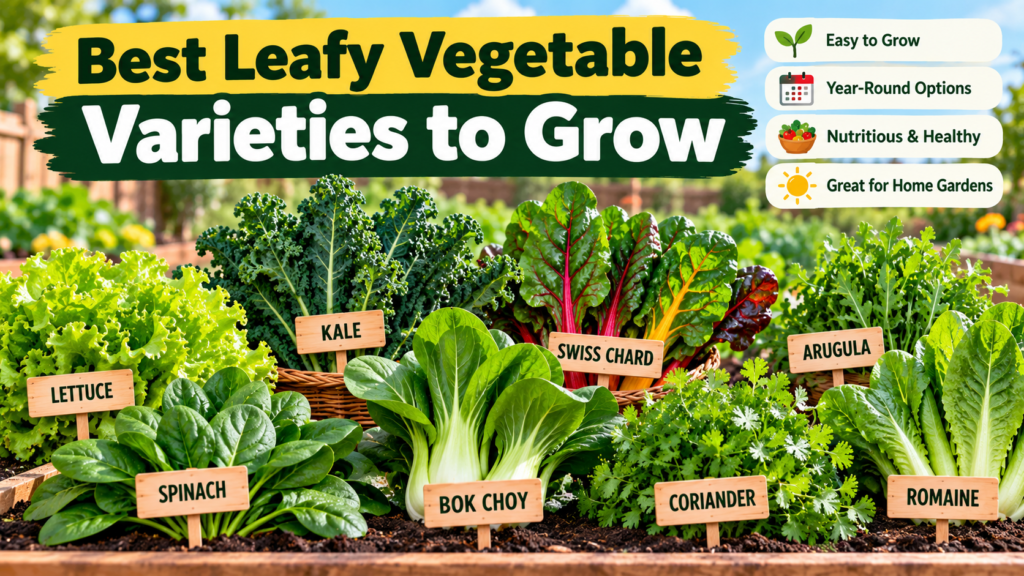
Spinach, lettuce, kale, Swiss chard, mustard greens, collard greens, and arugula are all useful choices for a home garden.
From my point of view, leafy vegetables are some of the easiest crops to experiment with because you can grow several types without needing a huge amount of space.
Start with a few varieties, observe how they perform during your growing season, and keep notes about flavor, growth, and harvest. Over time, you can build a collection of leafy vegetables that suits your garden perfectly.


