
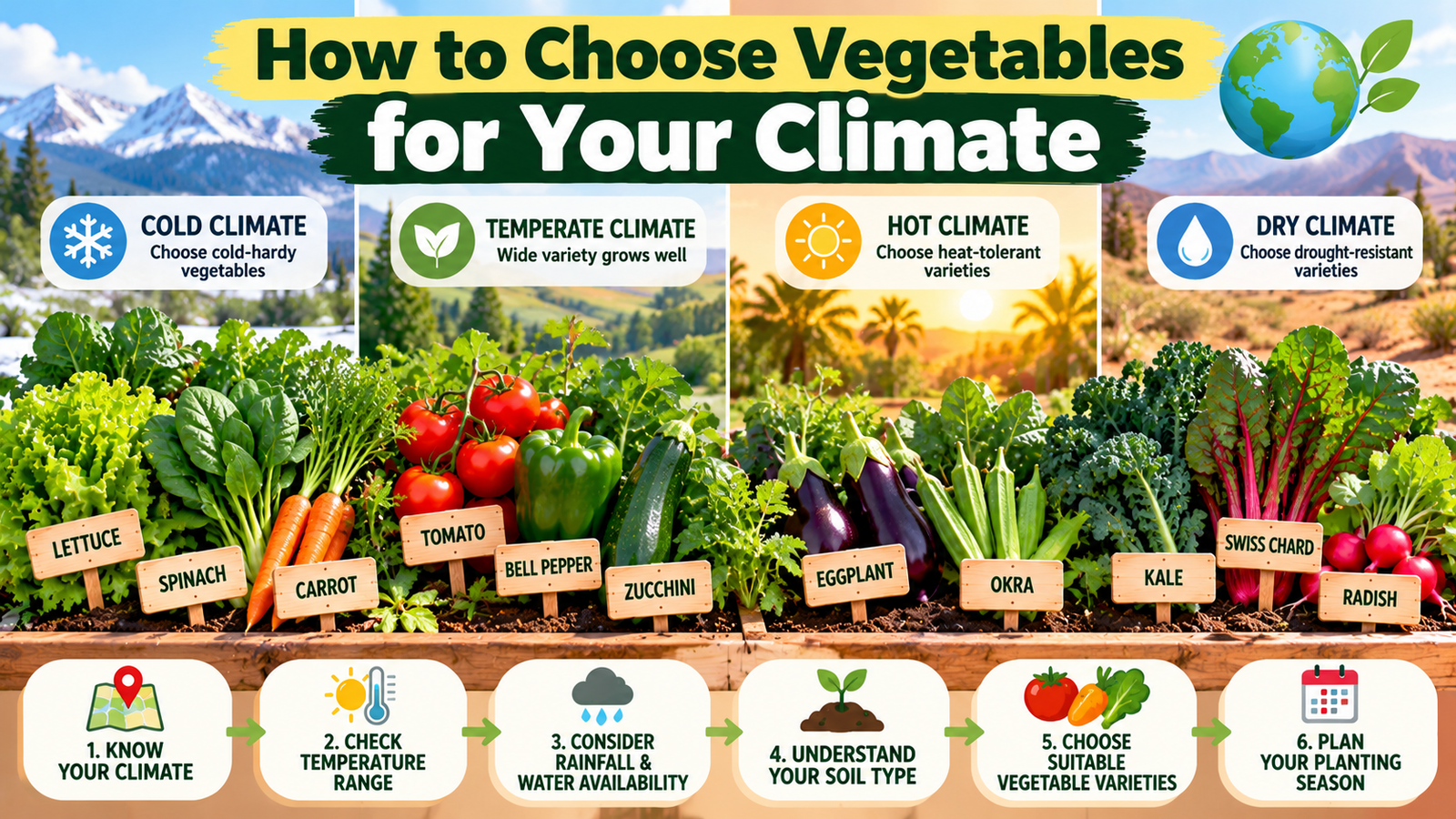
One of the most important decisions I make before starting a vegetable garden is considering the climate. A vegetable variety that grows beautifully in one region may struggle somewhere else because temperature, humidity, rainfall, and growing seasons can be very different.
Choosing vegetables for your climate does not have to be complicated. Once you understand whether your area is generally warm, cool, humid, dry, or seasonal, it becomes much easier to select suitable crops and varieties.
Why Climate Matters
Vegetables have different temperature requirements.
Some crops prefer cool weather, while others need warmth to grow well.
If you plant a cool season crop during extreme heat, it may grow poorly or bolt quickly. A warm season crop planted in cold conditions may fail to develop properly.
This is why climate should be one of the first things you consider when planning a garden.
Learn Your Growing Seasons
Start by understanding the seasons in your area.
Find out when temperatures normally become suitable for planting and when extreme heat or cold is expected.
This information can help you decide when to plant vegetables and which varieties are most appropriate.
Choose Cool Season Vegetables
Some vegetables perform best in cooler conditions.
Examples include lettuce, spinach, peas, radishes, and some leafy greens.
These crops can struggle when temperatures become too high.
If your local weather provides a suitable cool period, use it to grow these vegetables.
Choose Warm Season Vegetables
Tomatoes, peppers, cucumbers, squash, beans, and many other crops generally prefer warmer conditions.
They can grow vigorously when temperatures and soil conditions are suitable.
However, extreme heat can still cause problems, especially during flowering.
Consider Humidity
Humidity can influence plant health and disease development.
In humid conditions, good spacing and air circulation can become especially important.
Choose varieties that are known to perform well in your local environment when possible.
Avoid overcrowding plants because dense foliage can remain wet for longer periods.
Consider Rainfall
Rainfall is another important factor.
Too much water can cause root problems and encourage certain diseases, while insufficient rainfall can create water stress.
If your area receives heavy rain, choose well drained locations and suitable varieties.
If rainfall is limited, focus on crops that can perform well with efficient watering.
Consider Heat Tolerance
Gardeners in warm climates should pay attention to heat tolerance.
Some varieties can handle higher temperatures better than others.
If your summers are particularly hot, look for vegetable varieties recommended for warm growing conditions.
Providing shade during extreme heat may also help some crops, depending on their needs.
Consider Disease Resistance
Climate can influence disease pressure.
Warm and humid conditions may create an environment where certain diseases spread more easily.
Choosing varieties with resistance to relevant diseases can be helpful.
Good garden hygiene, spacing, watering practices, and healthy soil are also important.
Read Seed Packets Carefully
Seed packets can provide useful information about planting seasons, maturity times, spacing, and growing requirements.
I always recommend reading the information carefully rather than choosing a variety based only on its name or appearance.
The more you understand about a plant, the easier it becomes to provide the conditions it needs.
Experiment With Small Quantities
If you are unsure whether a variety will perform well, start small.
Plant a few seeds or a small number of plants and observe their performance.
Take notes about growth, flowering, harvest, disease problems, and flavor.
This can help you make better choices next season.

Final Thoughts
Choosing vegetables for your climate can save time, reduce frustration, and improve your chances of a successful harvest.
Consider temperature, growing seasons, rainfall, humidity, heat, and disease conditions before selecting varieties.
From my point of view, gardening becomes much easier when you stop trying to force plants to grow outside their preferred conditions.
Choose vegetables that naturally suit your environment, give them proper care, and pay attention to how they respond. Over time, you will learn exactly which varieties perform best in your local garden.


