When I first started paying attention to companion planting, I thought it would be much more complicated than it actually is. There are many charts and gardening guides that list plants that supposedly belong together, but I have found that beginners do not need to memorize dozens of combinations.
Simple companion planting is mainly about understanding how different plants use garden space and what they need to grow well. Some plants grow tall, while others stay close to the ground. Some vegetables need plenty of sunlight, while others can tolerate a little shade. When these differences are considered, it becomes easier to create a productive and organized garden.
For beginners, I recommend starting with a few easy combinations rather than trying to redesign the entire garden at once. With some observation and basic planning, companion planting can become a natural part of vegetable gardening.
What Is Companion Planting?
Companion planting means growing different plants near each other for practical gardening reasons. The idea is that certain plants may work well together because they have compatible growing requirements, different growth habits, or can make efficient use of the same space.
For example, a tall vegetable can grow beside a shorter leafy crop. The tall plant uses vertical space while the shorter plant uses the ground below.
Some gardeners also use companion planting as part of a broader approach to attracting beneficial insects and creating garden diversity.
I do not treat companion planting as a guaranteed solution for every gardening problem. Healthy soil, proper watering, sunlight, spacing, and regular care are still much more important.
Start With Simple Combinations
If you are new to companion planting, I recommend starting with combinations that are easy to understand.
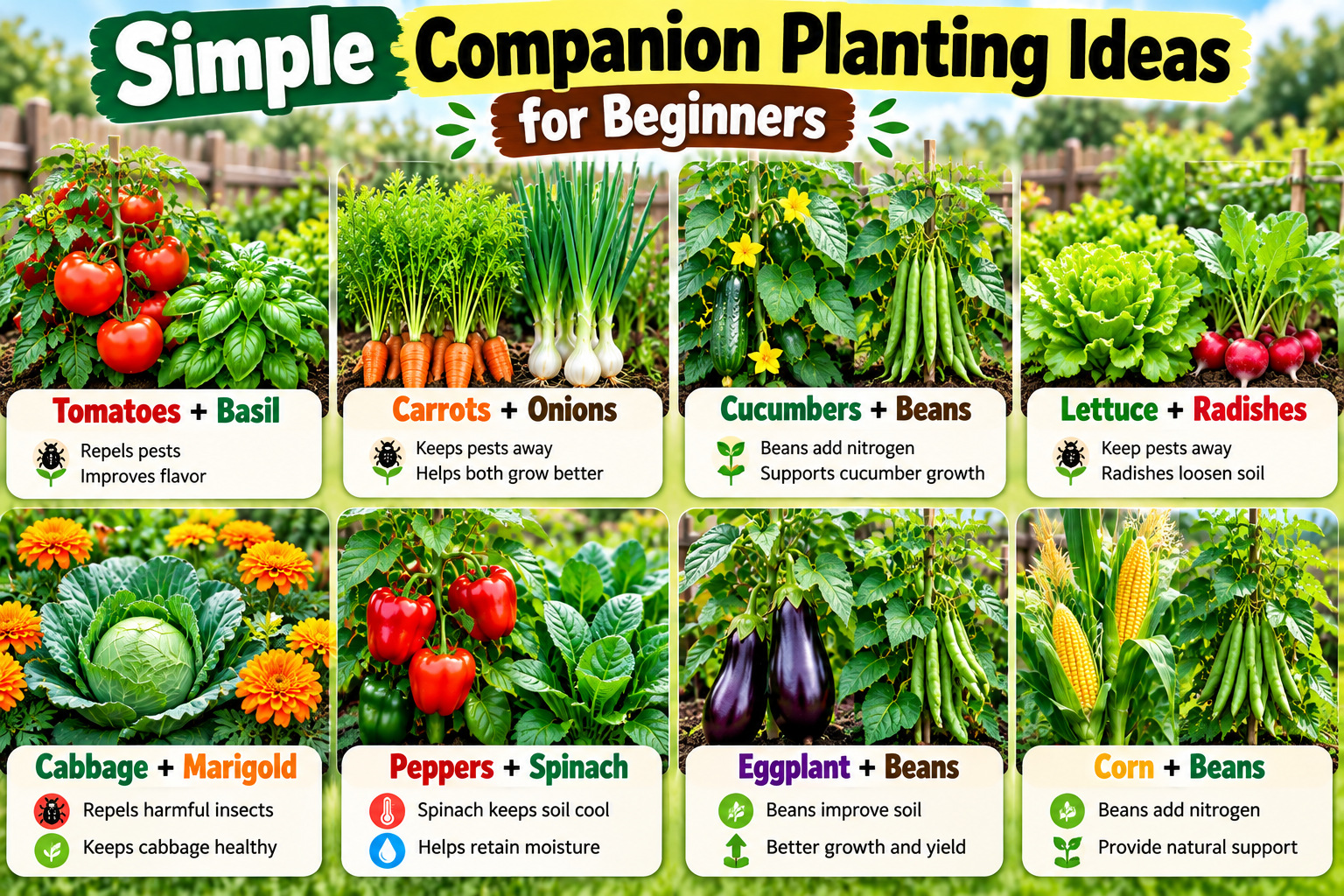
One simple example is tomatoes with basil. Another is carrots with radishes. Lettuce can be planted near taller vegetables when enough light remains available.
The goal is not to fill every empty space immediately. Instead, start with two or three combinations and observe how they perform.
This makes it easier to understand what works in your particular garden.
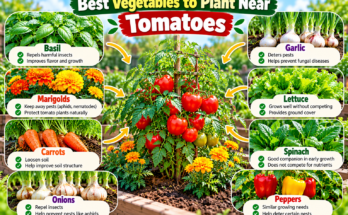
Tomatoes and Basil
Tomatoes and basil are one of the most familiar combinations in home gardening.
Both plants enjoy warm growing conditions and plenty of sunlight. Basil also takes up less space than a mature tomato plant, so it can fit around the edges of a tomato planting area.
I like this combination because it is simple and practical. I can grow tomatoes for fresh produce while keeping basil nearby for cooking.
When planting them together, I still leave enough space for the tomato plants to develop. I do not allow the basil to become so crowded that airflow is restricted.
Carrots and Radishes
Carrots and radishes are another beginner friendly combination.
Radishes grow quickly, while carrots take longer to mature. This means I can harvest the radishes while the carrots continue developing underground.
Both vegetables can make good use of the same general growing area when spacing is planned correctly.
I especially like this combination for small gardens because it allows me to get an early harvest without giving a large section of the garden to radishes.
Lettuce and Radishes
Lettuce and radishes are also easy crops for beginners to combine.
Both can be grown in relatively small spaces, and radishes mature quickly. Lettuce remains relatively low, so the two crops can share an area without creating a major height difference.
I make sure the soil is prepared properly and avoid planting too closely. Even small vegetables need enough room for healthy development.
This is a good combination for raised beds, small gardens, and beginners who want quick results.
Beans and Corn
Beans and corn are a classic combination, particularly when using climbing beans.
Corn grows tall and beans can climb upward. This allows both crops to use different parts of the garden space.
If I try this combination, I make sure the corn plants are strong enough to support the beans. I also provide additional support if needed.
This method can be especially useful in gardens where vertical space is available but ground space is limited.
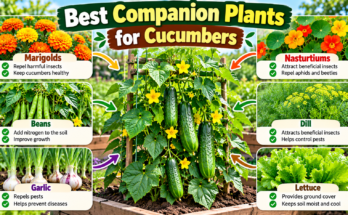
Cucumbers and Radishes
Cucumbers and radishes can also work together in a carefully planned garden.
Cucumber plants can take up a lot of ground space if they are allowed to spread. I prefer growing cucumbers vertically on a sturdy support whenever possible.
Radishes can occupy some of the nearby ground space while the cucumber vines grow upward.
This is an example of how understanding plant growth habits can help beginners make better use of a garden.
Peas and Lettuce
Peas can grow vertically with suitable support, while lettuce stays close to the ground.
This makes them an interesting combination for a small vegetable garden.
I would monitor the amount of shade created by the pea plants as they become taller. Depending on the season, some shade may be useful, but too much can affect lettuce growth.
The important thing is to observe the garden rather than following a fixed planting formula.
Flowers Can Be Part of Companion Planting
Companion planting does not have to include vegetables only. I like adding flowers to vegetable gardens because they can make the space more attractive and provide resources for pollinators and other beneficial insects.
Marigolds and nasturtiums are popular choices among home gardeners.
I usually plant flowers around the edges of vegetable beds rather than taking away too much space from food crops.
Adding flowers also makes a vegetable garden feel more like a complete garden rather than simply a collection of vegetable rows.
Use Herbs Around Vegetables
Herbs can also fit naturally into companion planting.
Basil can be planted around tomatoes, while herbs such as parsley and coriander can occupy small areas around vegetable beds.
One advantage of herbs is that many varieties do not require large amounts of space.
I find herbs particularly useful in small gardens because they can provide a harvest without needing a separate large planting area.
Think About Plant Height
Plant height is one of the easiest things beginners can use when planning companion plants.
Tall plants can create shade, while shorter plants usually need more direct access to sunlight.
I prefer placing tall plants where they will not block important sunlight from shorter vegetables.
If possible, I consider the direction of the sun before deciding where to place tall crops.
This simple step can prevent many problems later in the growing season.
Group Plants With Similar Water Needs
Water requirements are another important consideration.
If I place plants with similar watering needs together, garden maintenance becomes much easier. I do not want one crop sitting in constantly wet soil while another nearby crop is drying out.
Before planting two vegetables together, I check their general moisture requirements and choose combinations that can comfortably share the same watering routine.
This approach is practical and often more useful than relying only on traditional companion planting lists.
Do Not Overcrowd the Garden
One of the biggest mistakes beginners can make is planting too many companion plants in a small area.
Companion planting should help the garden, not turn it into a crowded jungle.
Every plant needs sufficient space for its roots and leaves. Good airflow is also important because dense vegetation can make it harder to inspect plants and maintain the garden.
I prefer leaving a little extra space rather than planting too densely.
Use Vertical Space
Vertical gardening is one of my favorite ideas for beginners with limited space.
Climbing beans, peas, cucumbers, and some tomato varieties can be trained to grow upward using appropriate supports.
This leaves more ground space available for smaller crops such as radishes, lettuce, carrots, and herbs.
A strong trellis can make a surprisingly large difference in a small vegetable garden.
I recommend installing supports before plants become large so the roots and surrounding soil are not disturbed later.
Observe Your Garden
One of the best companion planting tips I can give beginners is to observe what happens after planting.
Every garden has different conditions. Soil quality, sunlight, temperature, humidity, watering habits, and available space can all affect plant growth.
I like keeping simple notes about where I plant different crops. At the end of the season, I can see which combinations performed well and which ones need improvement.
This turns companion planting into a learning process rather than something that requires perfect knowledge from the beginning.
Rotate Crops Each Season
Companion planting works well with crop rotation.
Instead of planting the same vegetable families in the same location every year, I move crops around the garden when possible.
This helps me make better use of different garden sections and gives me an opportunity to try new combinations.
For beginners, even a simple rotation between a few garden sections can be a useful starting point.
Companion Planting Is Not a Magic Solution
There are many claims about companion planting online, but I think beginners should keep realistic expectations.
Planting two specific vegetables next to each other will not automatically prevent every pest, disease, or growing problem.
I consider companion planting one tool among many. Good soil preparation, adequate sunlight, proper watering, appropriate spacing, weed control, and regular observation are still essential.
When these practices are combined, companion planting becomes much more useful.
Easy Companion Planting Plan for Beginners
If I were creating a simple garden for someone completely new to companion planting, I would keep the layout straightforward.
I might create one section for tomatoes with basil nearby. Another section could contain carrots and radishes. A small area could be used for lettuce and radishes, while climbing beans could be grown with suitable vertical support.
I would also leave some room for flowers and herbs.
This type of garden does not require complicated planning. It simply uses different plant sizes and growth habits to make the available space more productive.
Final Thoughts
Simple companion planting ideas for beginners are really about learning how plants can share garden space comfortably. You do not need to memorize a huge list of combinations or follow complicated gardening rules.
Start with easy combinations such as tomatoes and basil, carrots and radishes, lettuce and radishes, beans and corn, or peas and lettuce. Pay attention to sunlight, water, soil, spacing, and plant height.
I believe the best way to learn companion planting is to start small and observe the results. Every growing season teaches something new.
With a little planning, companion planting can help create a more organized, productive, and enjoyable vegetable garden. The most important thing is to give every plant the conditions it needs while making smart use of the space available.