Tomatoes are one of my favorite vegetables to grow in a home garden because they are productive, useful in everyday cooking, and rewarding to watch as they develop. However, tomato plants can take up a good amount of space, so I always think carefully about what I plant around them.
Choosing the best vegetables to plant near tomatoes can help you make better use of garden space. Some vegetables can grow well around tomato plants because they have different growth habits, root patterns, or space requirements. Good companion planting can also make the garden more organized and productive.
In this article, I will share some of the vegetables I consider suitable for planting near tomatoes, along with practical tips for arranging them in a home vegetable garden.
Why Plant Vegetables Near Tomatoes
Growing different vegetables together is a simple way to use garden space efficiently. Tomatoes usually grow upward, especially when supported with cages, stakes, or trellises. This means there may be useful space around the base of the plant.
Instead of leaving this soil empty, I can use it for smaller vegetables that do not compete heavily with the tomato plant.
Another benefit is that a mixed vegetable garden can provide variety. Rather than dedicating an entire garden bed to tomatoes, you can grow several useful crops in the same general area.
However, companion planting is not a magic solution. Healthy soil, proper watering, adequate sunlight, good spacing, and regular plant care are still the most important factors for successful vegetable gardening.
Carrots
Carrots can be a good vegetable to plant near tomatoes because they grow underground while tomato plants grow mainly above the soil.
This difference in growth habit allows gardeners to use the same garden area more efficiently. Carrots generally need loose soil so their roots can develop properly, while tomatoes benefit from fertile soil with good drainage.
When planting carrots near tomatoes, I would avoid placing them directly against the tomato stem. Give both crops enough space for their roots and leaves to develop.
Carrots are also relatively compact, making them useful for filling some of the open space around taller tomato plants.
Lettuce
Lettuce is another vegetable that can work well around tomatoes, especially when the tomato plants are still young.
Lettuce grows close to the ground and does not require a large vertical structure. Depending on the climate, the partial shade created by mature tomato plants may also help protect lettuce from intense afternoon heat.
I think lettuce is particularly useful in gardens where space is limited. You can harvest the leaves while the tomato plants continue growing above them.
The main thing to remember is that lettuce needs enough light to grow properly. If the tomato plants become extremely dense, too much shade may reduce lettuce growth.
Spinach
Spinach can also be considered when planning vegetables near tomatoes. It grows relatively close to the ground and can make productive use of smaller areas.
In cooler growing conditions, spinach can provide an excellent leafy crop while tomatoes are developing. However, spinach generally prefers cooler weather, so the timing of planting is important.
I would not rely on spinach growing well in heavy shade beneath a large tomato plant. Instead, place it where it can receive enough indirect or direct light according to the local growing conditions.
Onions
Onions are another practical choice for growing near tomatoes. They occupy a relatively small amount of space and do not create a large canopy that competes with tomato plants for sunlight.
Green onions can be particularly convenient for small gardens because they can be harvested at different stages.
When I plan a vegetable garden, I like using compact crops such as onions around larger plants. This allows me to produce more food from the same garden area without making the bed unnecessarily crowded.
Good spacing is still important because overcrowding can make watering, harvesting, and pest inspection more difficult.
Peppers
Peppers and tomatoes have similar basic growing preferences in many gardens. Both generally appreciate warm conditions, sunlight, fertile soil, and consistent moisture.
For this reason, peppers can be convenient to include in a garden bed where tomatoes are already growing.
However, both plants can become fairly large depending on the variety. I would therefore leave enough room between them for air circulation and sunlight.
Avoid creating a dense wall of foliage. Good spacing helps plants dry more quickly after watering or rain and makes it easier to inspect leaves for insects and other problems.
Beans
Some types of beans can be grown in the same general garden area as tomatoes, but careful planning is necessary.
Bush beans are usually easier to manage around tomatoes because they do not require a large climbing structure. They can occupy some of the lower garden space while tomatoes grow upward.
Pole beans are different because they need support and can become vigorous climbers. If they are planted too close to tomatoes, they may compete for space or become tangled with tomato supports.
For this reason, I prefer keeping climbing beans separate or giving them their own support structure.
Radishes
Radishes are one of the easiest vegetables to fit into a vegetable garden because they grow quickly and require relatively little space.
They can be planted near tomatoes during suitable growing conditions and harvested before the tomato plants become extremely large.
This makes radishes useful for gardeners who want to maximize productivity from a small garden bed.
I especially like the idea of using fast growing vegetables around slower growing crops. While the tomato plants are developing, radishes can provide an earlier harvest.
Garlic
Garlic can also be included in a mixed vegetable garden near tomatoes. Its narrow leaves take up relatively little space, making it suitable for areas where there is limited room.
Garlic grows underground and therefore uses the soil differently from tomatoes.
As with other vegetables, I would avoid planting it so close to the tomato stem that both plants are competing for the same immediate root area.
Garlic also has a relatively long growing period, so consider its planting and harvesting schedule before placing it in a permanent garden bed.
Beets
Beets are another compact root vegetable that can make efficient use of garden space.
Since the edible root develops below the soil surface and the foliage stays relatively low, beets can fit into some spaces around taller tomato plants.
The soil should be loose enough for the beet roots to develop properly. Avoid heavily compacted soil, especially if you want smooth and well formed roots.
I find root vegetables particularly useful in mixed gardens because their growth pattern is different from tall plants such as tomatoes.
Basil and Other Herbs
Although basil is an herb rather than a vegetable, I would definitely consider it when planning a garden around tomatoes.
Basil is commonly grown alongside tomatoes in home gardens, and both enjoy warm growing conditions. It also makes practical sense from a kitchen perspective because fresh basil and tomatoes are used together in many dishes.
Other herbs can also be useful depending on your local climate and available space.
The important thing is not to overcrowd the area. Herbs should still have enough room for healthy growth and easy harvesting.
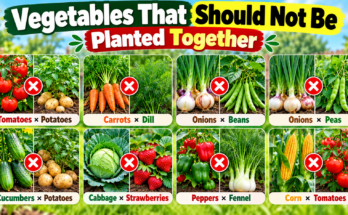
Vegetables I Would Keep at a Distance
Not every vegetable is automatically suitable for planting close to tomatoes.
Tomatoes are members of the nightshade family, along with crops such as peppers and eggplants. Growing related crops together is not necessarily a problem, but it can make crop rotation and disease management more important.
I would also avoid placing very aggressive or extremely large plants directly beside tomatoes if they are likely to compete heavily for sunlight, water, or nutrients.
The goal of companion planting should be better garden organization rather than simply putting as many plants as possible into one area.
Give Tomatoes Enough Space
One of the biggest mistakes I see in vegetable gardens is overcrowding.
Tomato plants can become surprisingly large. If several vegetables are planted too close together, airflow can become poor and harvesting can become difficult.
When planting vegetables near tomatoes, always consider the mature size of every crop.
Leave enough room to walk around the plants, water the soil, remove weeds, inspect leaves, and harvest ripe vegetables.
A slightly less crowded garden is often easier to maintain and can produce healthier plants than an overcrowded garden.
Think About Sunlight and Water
The best vegetables to plant near tomatoes should have growing requirements that fit the conditions of your garden.
Tomatoes usually need plenty of sunlight and consistent watering. Vegetables planted nearby should receive enough light for their own growth.
Watering should also be done carefully. Instead of constantly wetting tomato leaves and surrounding foliage, I prefer watering the soil near the roots.
Mulching around plants can help conserve soil moisture and reduce weed growth, but leave appropriate space around the tomato stem.

Final Thoughts
Choosing the best vegetables to plant near tomatoes is mainly about understanding how different plants use garden space.
Carrots, lettuce, spinach, onions, peppers, bush beans, radishes, garlic, and beets can all be useful choices depending on your growing conditions. Herbs such as basil can also fit naturally into a tomato garden.
For me, the most important part of companion planting is balance. I do not try to fill every empty piece of soil. Instead, I choose plants that can share the space without creating unnecessary competition.
Tomatoes need adequate sunlight, water, nutrients, and airflow. The vegetables planted around them should have enough room to grow as well.
With thoughtful spacing and good garden planning, you can turn one tomato bed into a productive mixed vegetable area. This approach can make a small garden more useful while giving you a wider variety of fresh vegetables throughout the growing season.