Butterflies can make a vegetable garden feel more alive. I enjoy seeing butterflies moving between flowers because they add beauty while also playing a role in pollination. If you want to attract butterflies to your vegetable garden, the key is to create an environment where they can find food, water, shelter, and suitable plants.
You do not need a large garden to attract butterflies. Even a few flowering plants can make a difference.
Why Butterflies Visit Gardens
Adult butterflies mainly visit flowers to feed on nectar. They are naturally attracted to colorful and fragrant flowers that provide an accessible food source.
A vegetable garden with flowering plants can therefore become attractive to butterflies.
While butterflies may not be as efficient as bees for every type of vegetable, they are still valuable members of a healthy garden ecosystem.
Grow Butterfly Friendly Flowers
The easiest way to attract butterflies is to grow flowers that provide nectar.
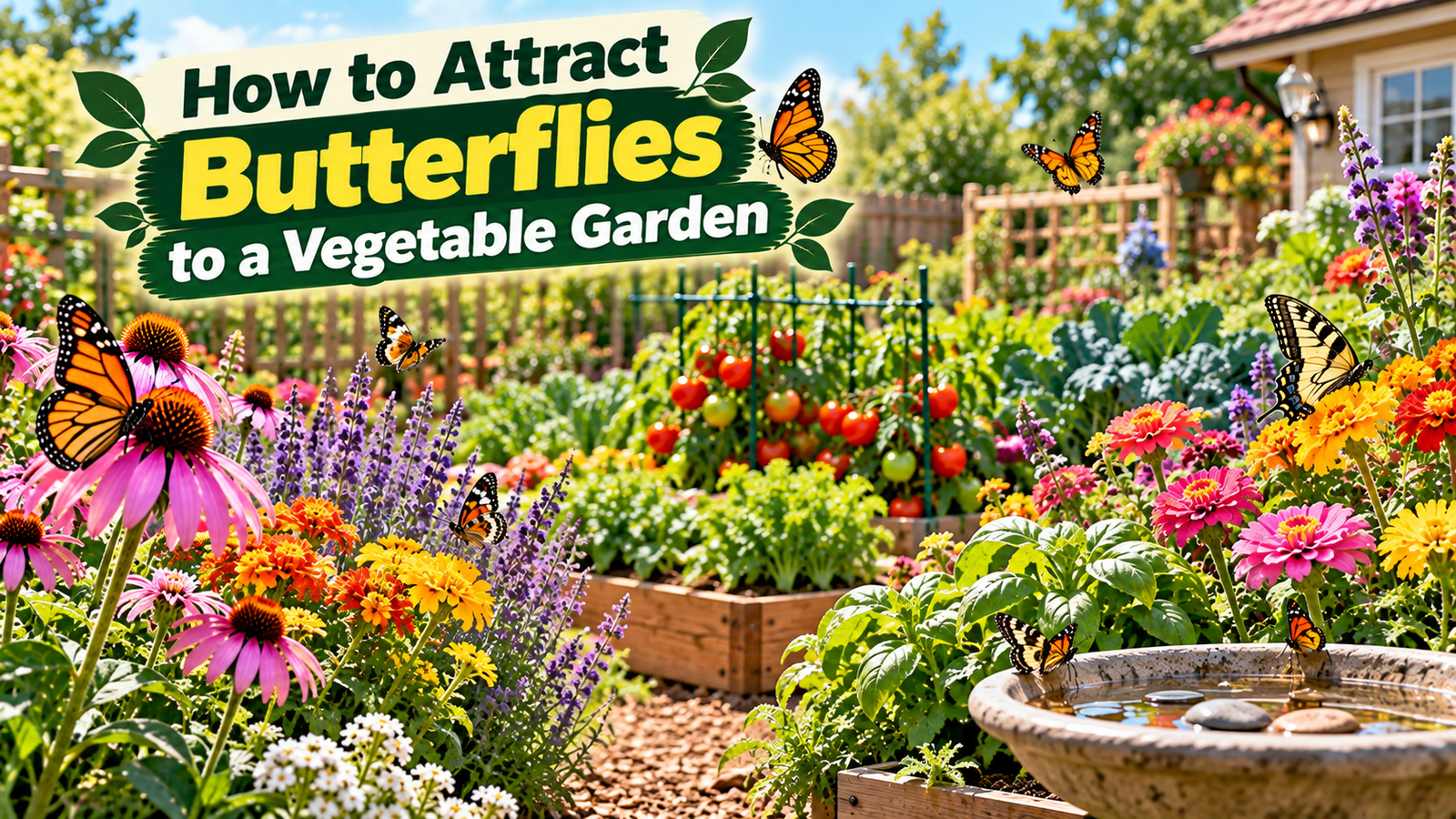
Zinnias, cosmos, sunflowers, lavender, marigolds, and many other flowering plants can attract butterflies.
When selecting flowers, I recommend choosing different shapes and colors. This creates a more diverse environment and can encourage more visits.
Use Bright Flower Colors
Butterflies are attracted to colorful flowers. Bright shades can make a garden more noticeable to them.
Planting groups of colorful flowers can create an attractive feeding area.
Instead of planting one flower here and another far away, I prefer creating small groups or borders. This can make the garden look more organized while also creating a stronger visual area for pollinators.
Provide Flowers Throughout the Season
One of the best ways to support butterflies is to provide flowers over a long period.
If all flowers bloom at the same time, the garden may provide food for only a short period.
Choosing plants with different blooming periods can help maintain nectar availability for longer.
This is useful not only for butterflies but also for bees and other pollinating insects.
Provide a Safe Water Source
Butterflies need water and minerals. A shallow damp area can provide a useful source.
Some gardeners create small butterfly puddling areas using shallow containers with damp soil or sand.
The important thing is to avoid deep water. Butterflies need a safe surface where they can land.
Create Sunny Areas
Butterflies are cold blooded insects and often use sunny areas to warm themselves.
A garden with sunny flowers and open spaces can be attractive to them.
If possible, choose a location where flowers receive good sunlight while still having some sheltered areas nearby.
Avoid Unnecessary Pesticides
If your goal is to attract butterflies, excessive pesticide use can work against you.
Butterflies and their young stages can be affected by some pest control products. For this reason, I believe gardeners should identify problems before applying treatments.
A few insects on a plant do not always mean that immediate control is necessary.
Understand Caterpillars
This is an important point for anyone who wants a butterfly friendly garden.
Butterflies begin life as caterpillars, and caterpillars need plants to eat. Some gardeners remove every caterpillar they see because they are worried about leaf damage.
However, if you want butterflies, you need to accept that some caterpillars may be present.
The goal is balance. If caterpillars are causing serious damage to important vegetable crops, they may need to be managed. But not every caterpillar should automatically be treated as an enemy.
Grow Suitable Host Plants
Butterflies need specific plants for laying eggs and supporting caterpillars. Different butterfly species prefer different host plants.
Researching butterflies common in your region can help you choose suitable host plants.
Native plants can be particularly useful because local butterflies may already depend on them.
Provide Shelter
Butterflies need protection from strong winds, heavy rain, and extreme conditions.
Shrubs, taller flowers, grasses, and other plants can provide shelter.
A garden that contains different layers of vegetation can offer more hiding and resting places than a completely open garden.
Keep Some Natural Areas
A perfectly tidy garden may not always be the best environment for butterflies.
Natural areas can provide shelter and food resources. Allowing some suitable plants to remain can create a more diverse habitat.
This does not mean letting the entire garden become overgrown. Instead, you can designate a small section as a natural area.
Avoid Disturbing Butterfly Resting Areas
When you notice butterflies resting on plants, it is best to observe them rather than disturb them.
Butterflies may use leaves and stems for resting, warming themselves, or other natural activities.
A quiet garden can therefore be more welcoming than one where plants are constantly being disturbed.
Add Native Plants
Native flowering plants can be excellent additions to a butterfly garden.
They are adapted to local conditions and can provide resources for local insects.
When planning a butterfly friendly vegetable garden, I would rather choose a few reliable local plants than fill the garden with plants that struggle in the climate.
Combine Beauty With Food Production
A butterfly friendly vegetable garden does not need to sacrifice productivity.
Flowers can be planted along borders and pathways. Containers can hold flowering plants. Small unused areas can become pollinator spaces.
This allows you to grow vegetables while also creating a beautiful environment for butterflies.
Final Thoughts
Attracting butterflies to a vegetable garden is mainly about providing the right environment. Flowers provide nectar, host plants support the butterfly life cycle, water offers an additional resource, and shelter helps protect butterflies from harsh conditions.
From my point of view, the most enjoyable part is simply watching the garden become more active. Once butterflies, bees, and other beneficial insects begin visiting regularly, the garden feels like a complete ecosystem rather than just a collection of vegetable plants.
With a few thoughtful changes, even a small vegetable garden can become a welcoming place for butterflies.