Bees are among the most valuable visitors a vegetable garden can have. When I see bees moving from one flower to another, I know they are doing important work for the plants. Their activity can help flowering vegetables produce fruits, making them an important part of a productive garden.
The good news is that attracting bees does not require a complicated setup. With the right flowers, shelter, water, and gardening practices, almost anyone can make a vegetable garden more attractive to bees.
Why Bees Are Important for Vegetable Gardens
Bees help transfer pollen between flowers as they search for nectar and pollen. This natural process is essential for many flowering plants.
Vegetables such as cucumbers, squash, pumpkins, and melons can benefit greatly from bee activity. Tomatoes and some other crops can also benefit from certain types of bee activity.
For me, one of the easiest ways to understand the importance of bees is to look at the flowers on vegetable plants. Flowers are the beginning of the fruit production process, and pollinators help move that process forward.
Plant Bee Friendly Flowers
One of the simplest ways to attract bees is to grow flowers that provide nectar and pollen.
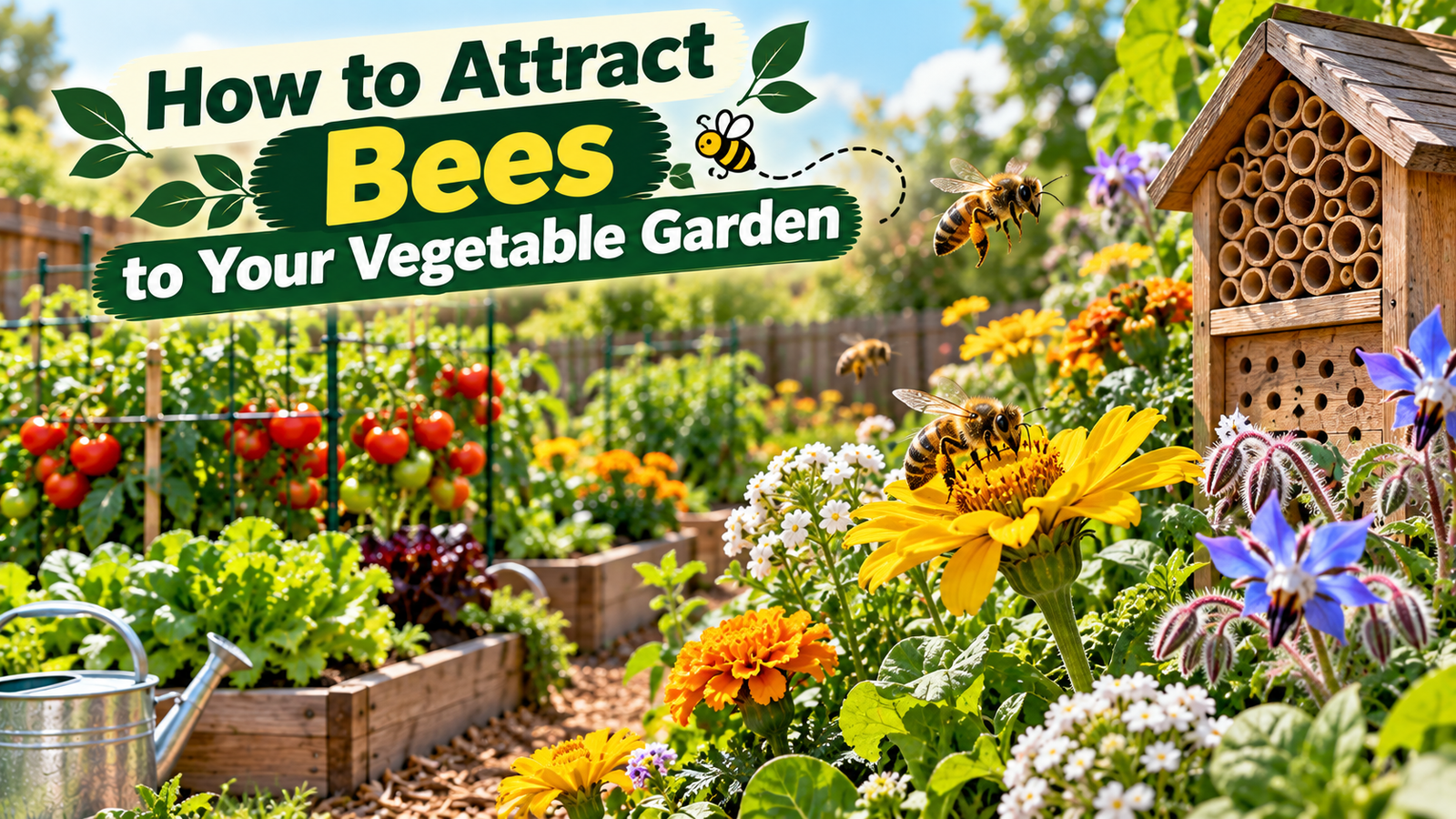
Sunflowers are a popular choice because they are easy to grow and produce large flowers that attract many insects. Zinnias, cosmos, lavender, marigolds, and many local flowering plants can also make useful additions to a garden.
I recommend choosing several different flowers rather than relying on only one variety. This creates a more diverse food source and can make the garden attractive for a longer period.
Grow Flowers Near Vegetable Plants
The location of flowers can also matter. If flowers are planted close to vegetable beds, bees can easily move between the flowers and vegetable plants.
You do not need a separate flower garden. Flowers can be planted around the edges of vegetable beds, between suitable spaces, or in containers.
This approach is especially useful for smaller gardens where every part of the available space needs to serve a purpose.
Choose Flowers That Bloom at Different Times
A common mistake is planting flowers that all bloom at the same time. When those flowers finish blooming, bees may have fewer food sources available.
I prefer using plants with different blooming periods. Early blooming flowers can provide food at the beginning of the season, while summer and later blooming plants can continue supporting bees.
This creates a more consistent food supply and can encourage bees to keep visiting your garden.
Avoid Unnecessary Pesticides
If your goal is to attract bees, pesticide use deserves careful consideration.
Some pest control products can affect beneficial insects. Instead of automatically spraying whenever I see an insect, I believe it is better to identify the insect first.
Some insects may actually be helping the garden. Others may be harmless and do not require control.
When pest control is necessary, gardeners should carefully follow product directions and consider methods that reduce unnecessary exposure to pollinators.
Provide a Clean Water Source
Bees need water too. A shallow container with clean water can provide a simple drinking area.
The important thing is to avoid creating a deep container where insects could fall in. Adding small stones or other safe landing surfaces can give bees places to rest while drinking.
The water should be kept clean and refreshed regularly.
Provide Shelter for Bees
Bees need places to rest and, depending on the species, suitable locations for nesting.
Different bee species use different nesting environments. Some nest in soil while others use natural cavities.
A garden with some natural areas can provide useful shelter. You do not need to make every part of your garden perfectly tidy.
Leaving suitable natural material and avoiding unnecessary disturbance can help create a more welcoming environment.
Use Native Plants When Possible
Native plants can be especially useful because local pollinators may already be adapted to them.
When choosing flowers for your garden, I recommend considering plants that naturally grow well in your local climate. These plants often require less effort once established and can provide useful resources for local insects.
Native plants can also support a wider range of wildlife.
Do Not Be Afraid of a Few Weeds
Not every plant that appears naturally in a garden needs to be removed immediately.
Some wildflowers and flowering weeds can provide food for bees. Of course, invasive plants or weeds that seriously compete with vegetables should be managed, but a completely sterile garden may provide fewer resources for pollinators.
I like to leave selected areas natural when possible while keeping vegetable beds organized.
Grow a Variety of Vegetables
A diverse vegetable garden naturally provides more flowers throughout the growing season.
Allowing suitable vegetables to flower can provide additional resources for bees. Some gardeners remove flowers from certain plants, but flowering plants can have value beyond vegetable production because their flowers attract pollinators.
A mixed garden can therefore support both food production and biodiversity.
Avoid Disturbing Bees
If you notice bees visiting your flowers, there is usually no reason to interfere with them. Most bees are focused on finding food rather than bothering people.
Observing them from a comfortable distance is a better approach.
If you find a nest or nesting area, avoid disturbing it. If there is a safety concern, professional advice may be appropriate.
Make Your Garden Chemical Conscious
A bee friendly garden is not necessarily a completely chemical free garden, but thoughtful garden management can reduce unnecessary risks.
Before applying any product, ask yourself whether it is actually needed. Identify the pest, consider the level of damage, and look at alternative methods.
This simple habit can protect many helpful insects while also making garden management more intentional.
Create a Small Bee Friendly Area
You do not need a huge garden to support bees. Even a small area with flowers can provide useful resources.
A few containers filled with flowering plants can work for people who have balconies, patios, or small gardens.
If you have more space, you can create a larger pollinator border with several types of flowers.
The important thing is consistency. A small garden that regularly provides flowers can be more useful than a large garden with flowers only for a short period.
Final Thoughts
Attracting bees to a vegetable garden is one of the simplest ways to support natural pollination. Flowers, water, shelter, and thoughtful pest management can all help create a bee friendly environment.
From my point of view, the best approach is to work with nature instead of trying to control every part of the garden. When you create a garden where bees can find food and shelter, they are more likely to visit.
A vegetable garden filled with flowers and buzzing bees is not only productive but also a wonderful reminder that gardening is connected to the natural world around us.